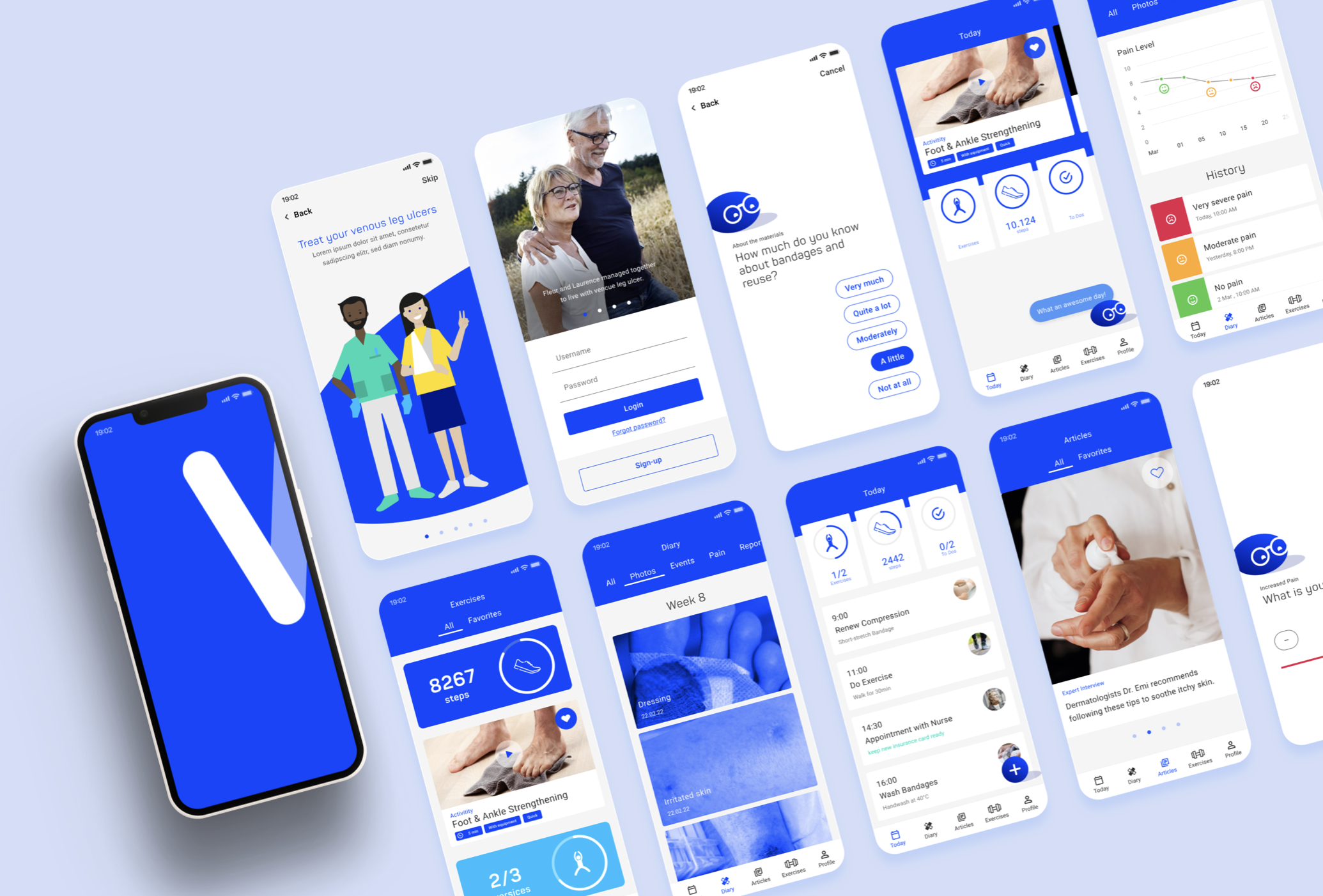
Digital companion app for wound care patients
Client: confidential
Role: Lead UX Researcher
Methods: Co-Creation Workshop, Design Sprint, Wireframing, Remote Usability Testing, Expert Interviews
Scope: Chronic wound patients across DE, UK, FR
Chronic wounds such as venous leg ulcers, diabetic foot ulcers or pressure ulcers require strict, long-term treatment plans: regular doctor visits, consistent dressing changes, medication compliance and lifestyle adjustments involving diet, movement and daily routines. For many patients, who are often older, sometimes living with obesity or diabetes, this is overwhelming.
A digital companion was envisioned to support patients along this demanding journey: helping them stay on track, offering reassurance and making the healing process more understandable and less isolating.
The goal was to explore UI concepts, prototype an early user experience and validate these ideas directly with patients.
Context
The core challenge was to create a solution that patients of all ages, digital skill levels and medical backgrounds could genuinely integrate into their treatment. The experience had to be motivating and empathetic without feeling childish, and medically reliable without becoming clinical or intimidating.
We needed to strike the right balance between:
a companion that guides, reassures and motivates
a medical tool that supports documentation and adherence
an interface that older or less tech-savvy users can navigate with ease
Remote research increased the importance of clarity, emotional resonance and intuitive interaction throughout the prototype.
Challenge
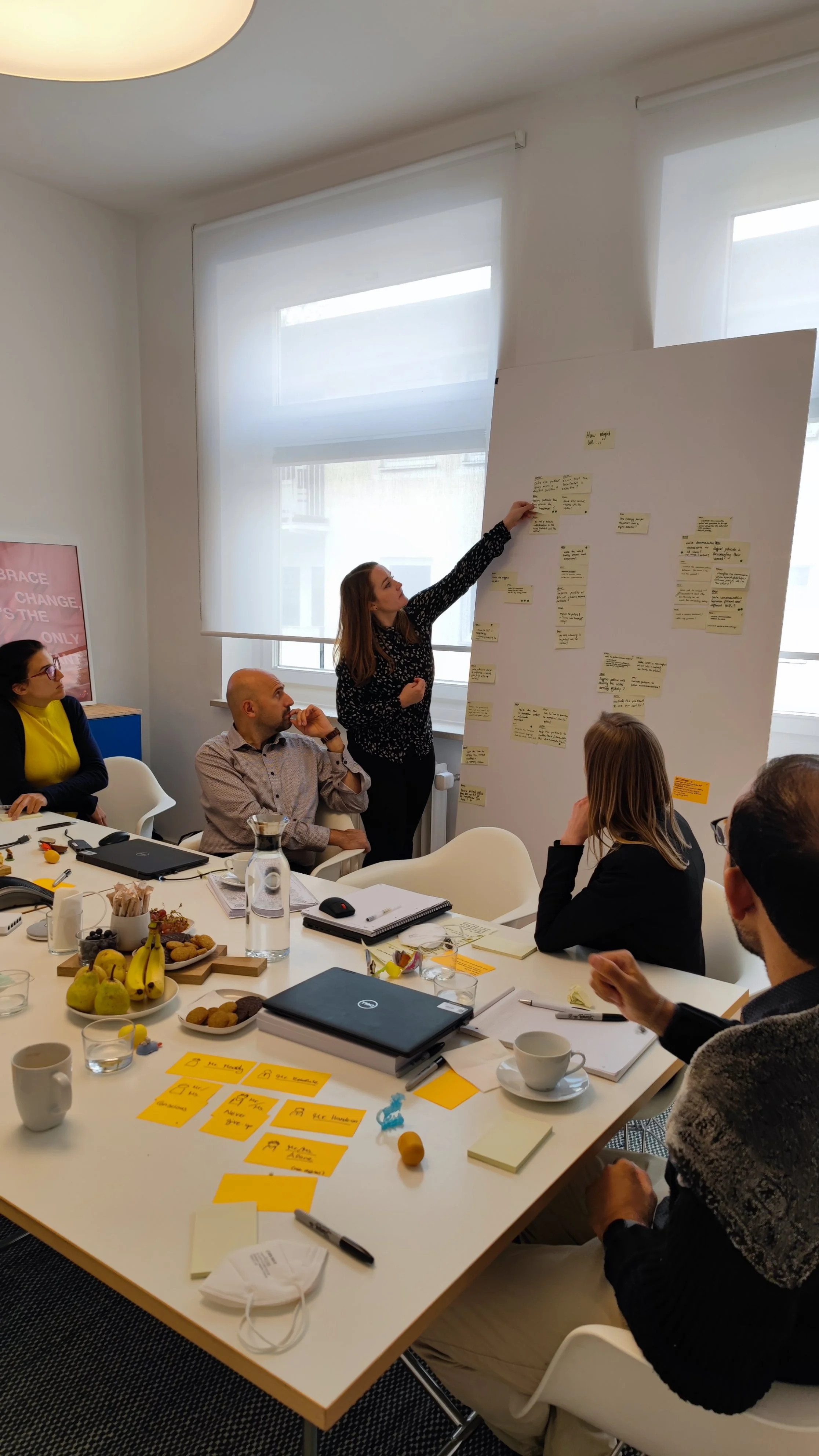
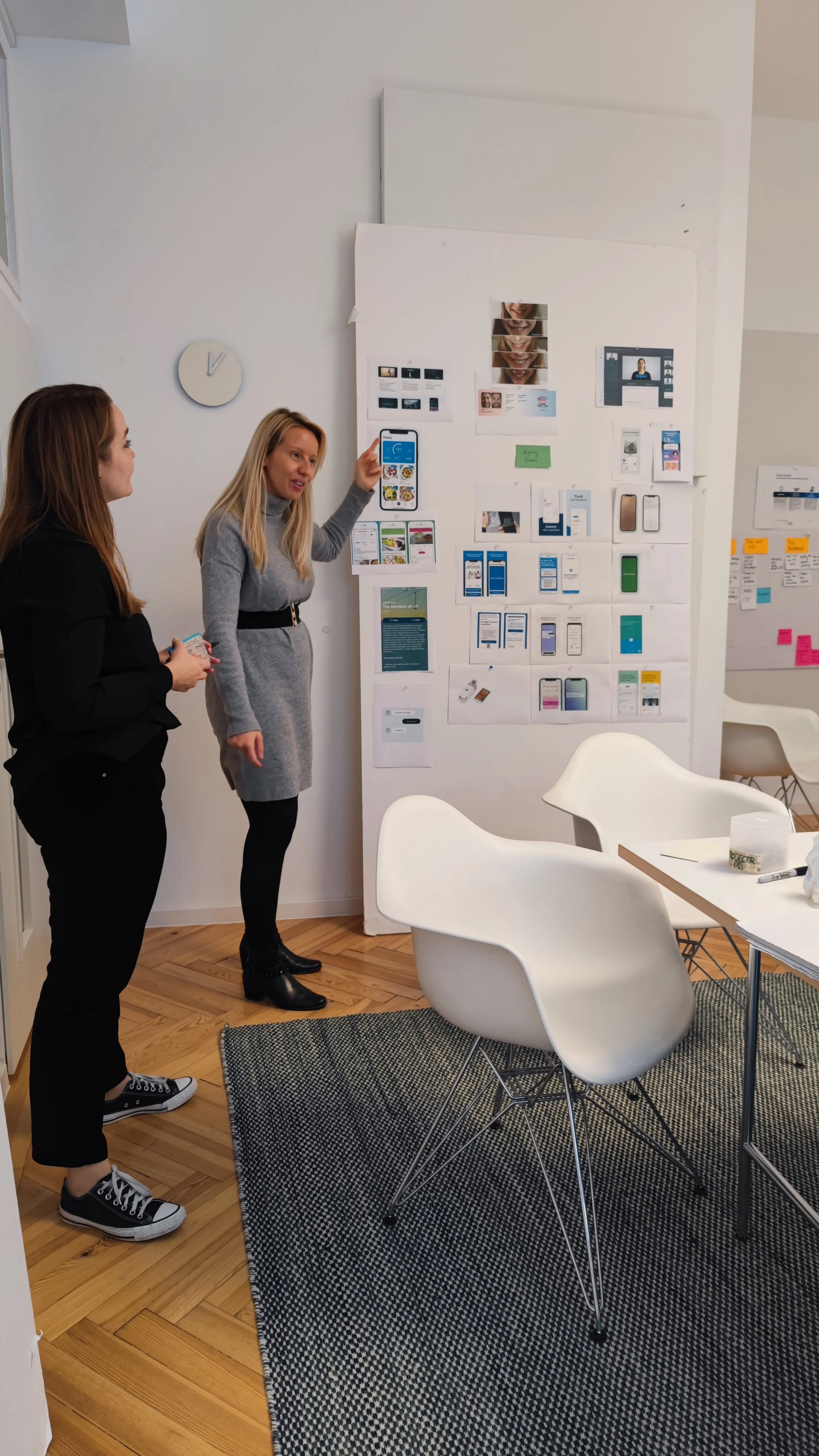
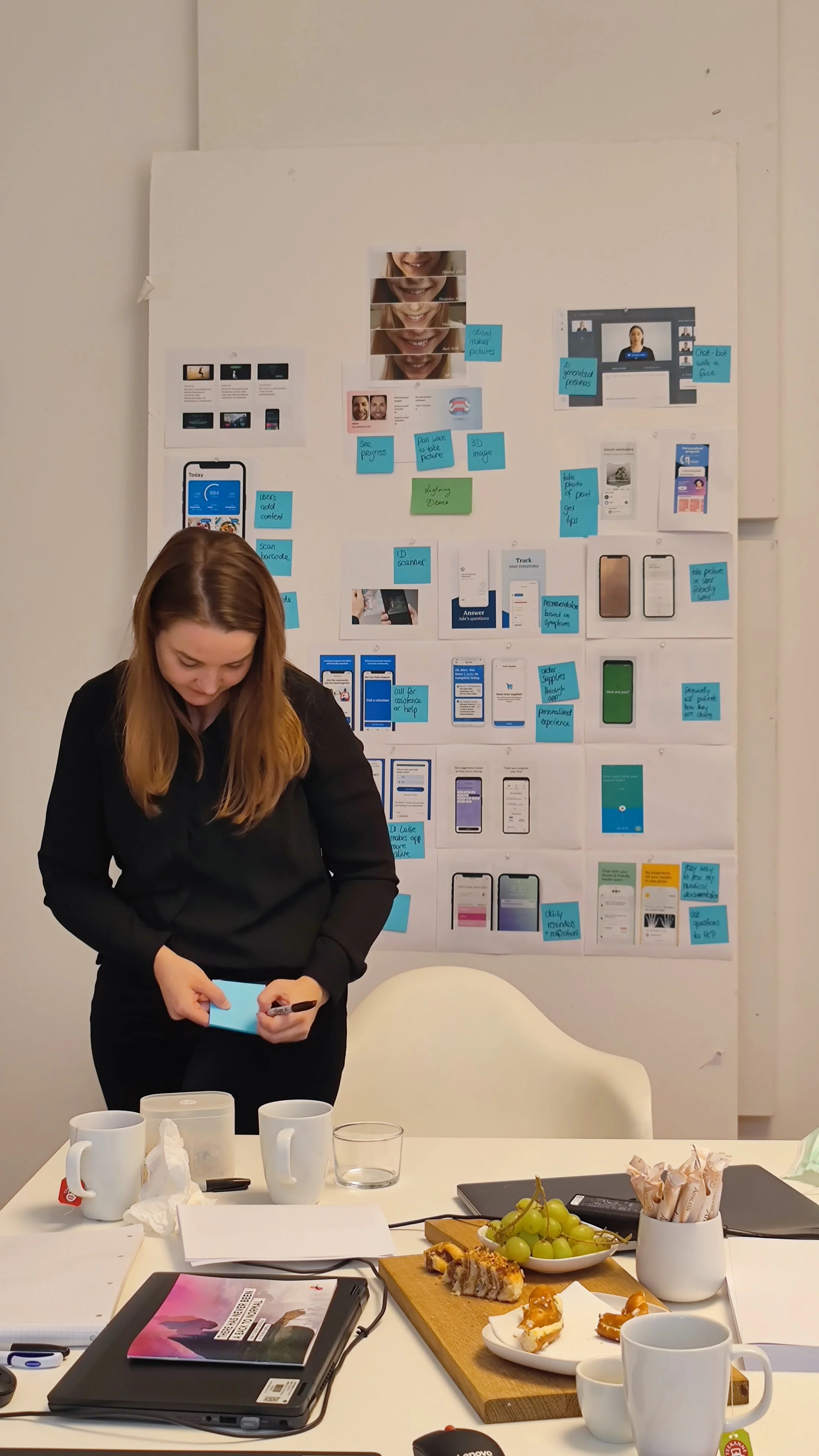
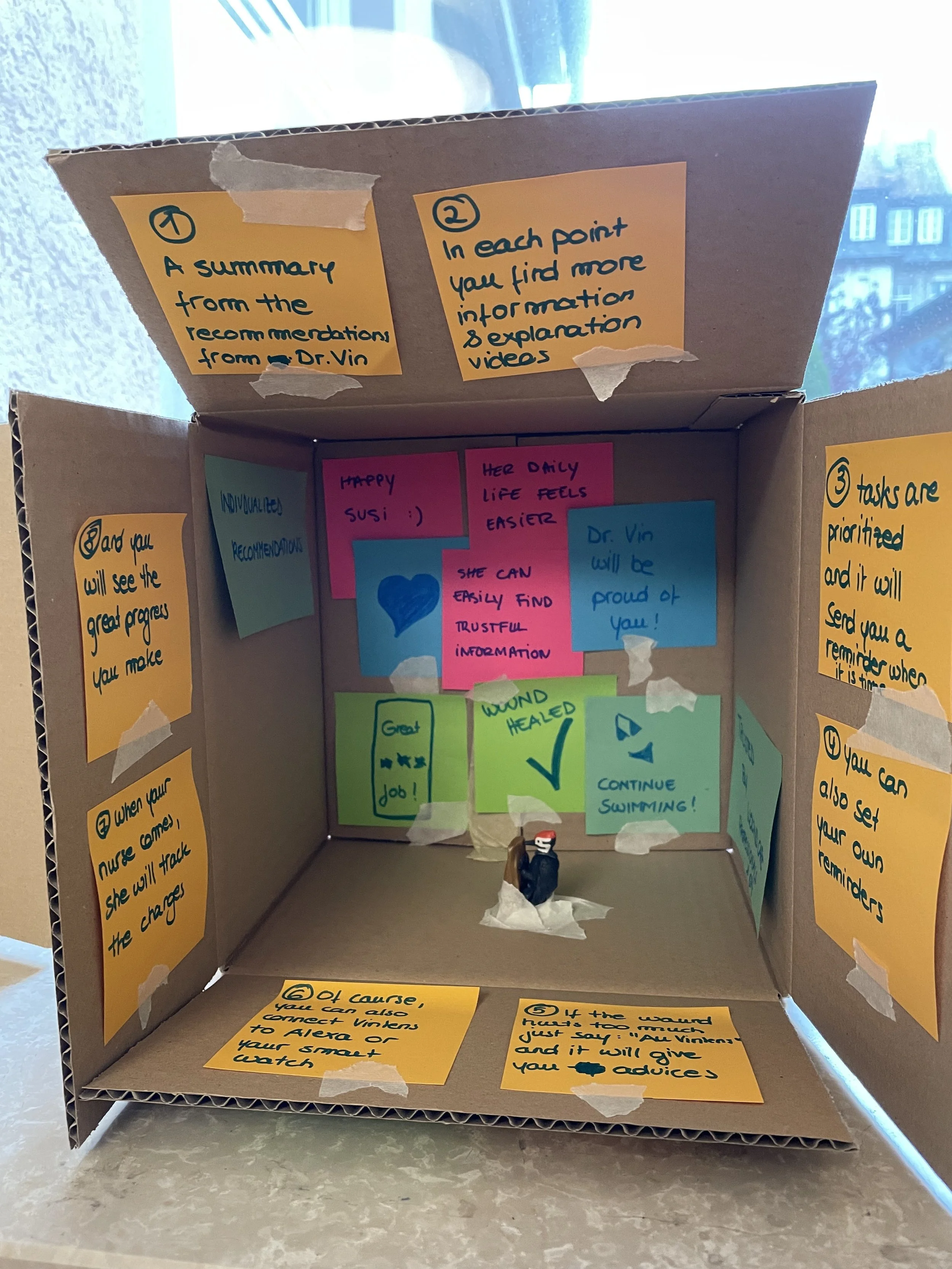
Co-Creative Design Sprint
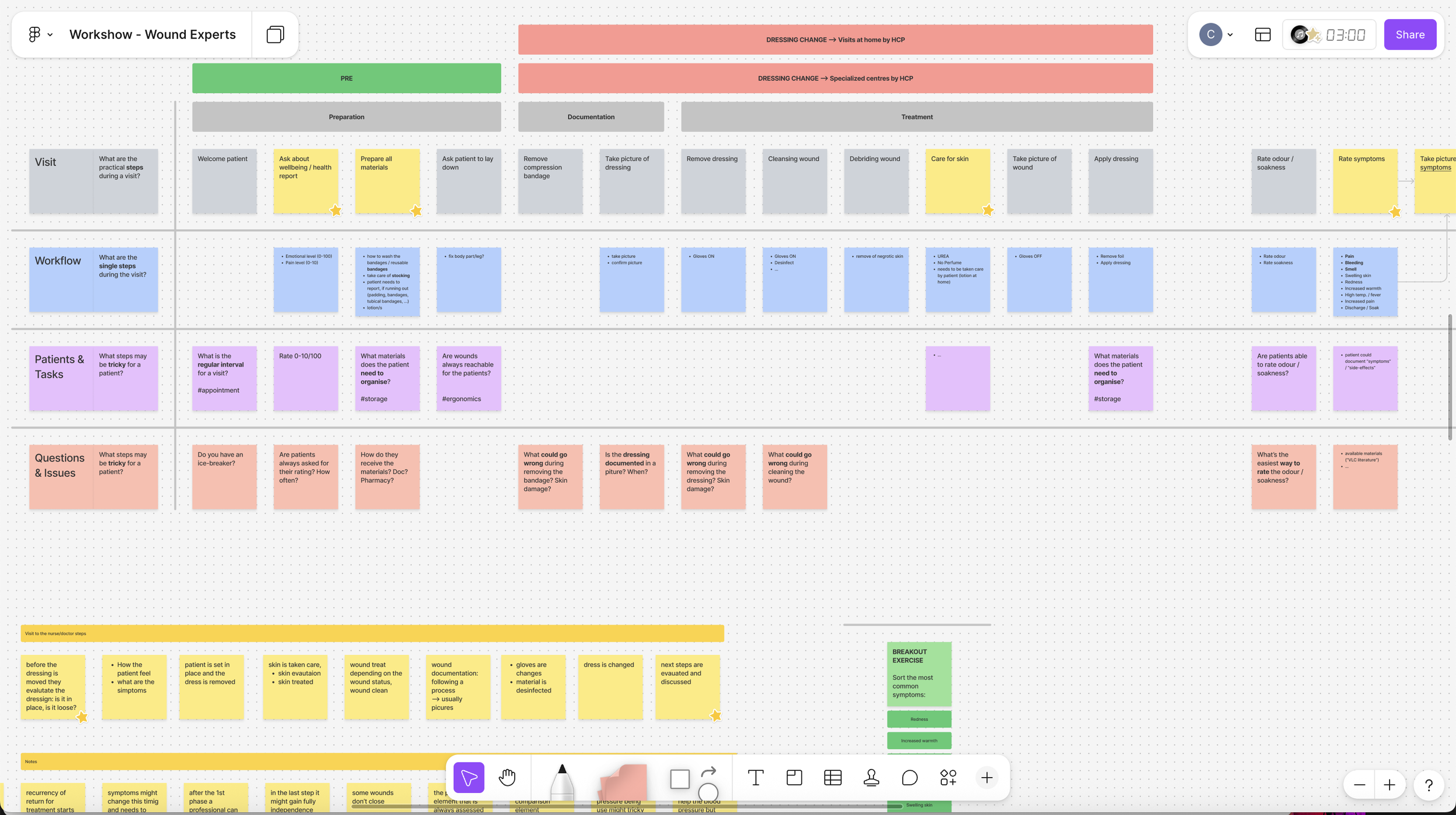
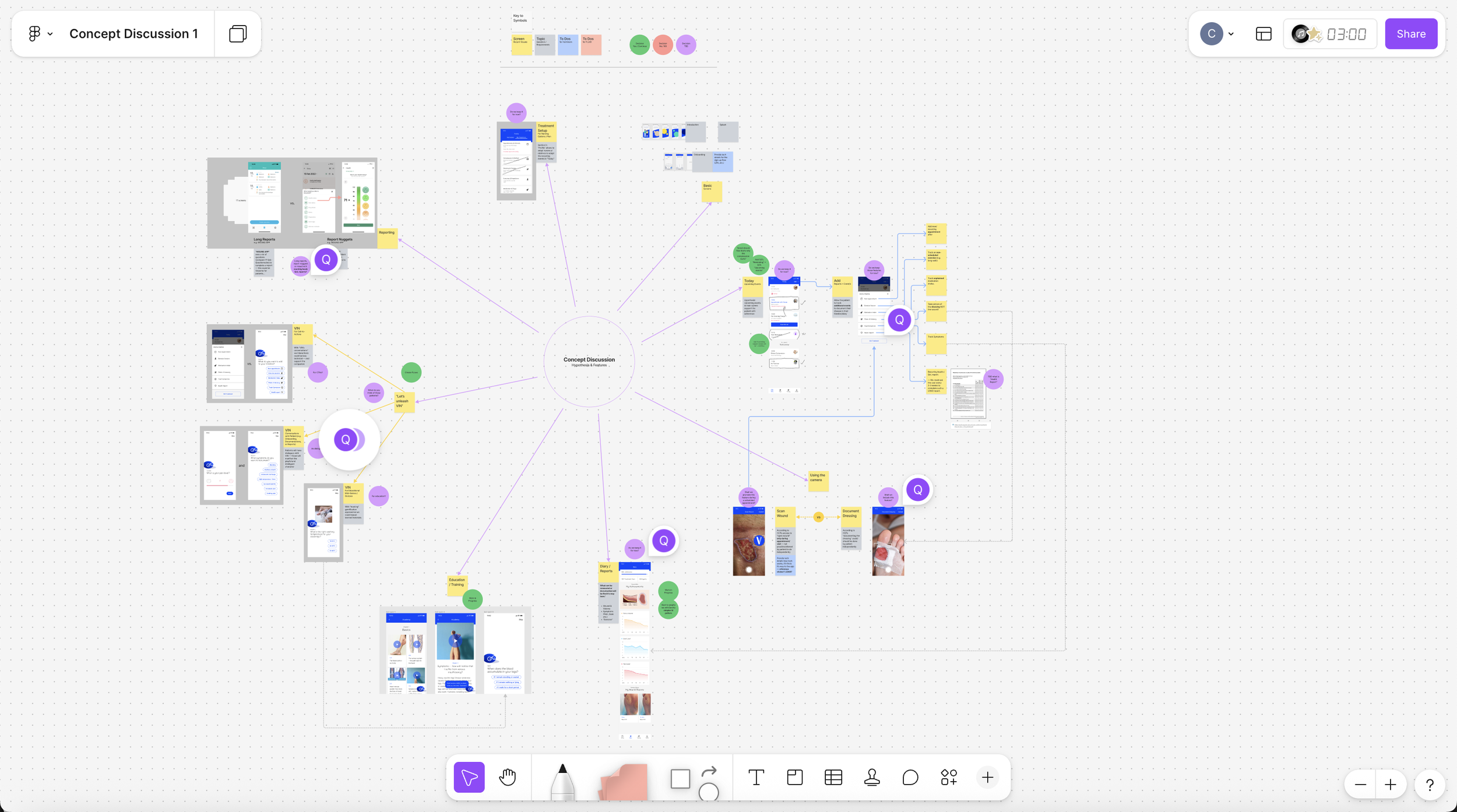
The project began with a 3-day workshop I prepared and moderated to bring the client team together around patient challenges, behavioral barriers and opportunity areas. We mapped the treatment journey, explored emotional touchpoints and agreed on initial concept directions.Wireframing & Interactive Prototypes
The design team translated the selected concept directions into wireframes and a clickable Figma prototype. I supported this phase by shaping the user flows, ensuring clarity in the interaction logic and preparing the prototype elements needed for remote usability testing.Expert Research
Conversations with wound-care specialists and healthcare professionals helped us understand treatment protocols, patient barriers and behavioral patterns. This informed features connected to lifestyle change, symptom tracking and motivational feedback loops.
Approach
Remote Usability Testing
We conducted 15 one-hour remote sessions with patients living with chronic wounds across Germany, the UK and France.
Participants included individuals with venous ulcers, pressure ulcers, diabetic foot and other long-term wound conditions.
Testing explored concept acceptance and reactions to:onboarding
dashboard
wound documentation
avatar interactions
notifications
progress tracking and rewards
Iterative Refinement
Findings were synthesised into actionable design recommendations for the next iteration of the experience.
Education reduces fear and increases adherence
Patients often lacked basic knowledge about their condition. Clear explanations, bite-sized lessons and simple visuals helped them understand their role in healing.Motivation increases when progress becomes visible
Tracking pain, wound appearance, activity and tasks helped patients see improvements they otherwise missed. This increases confidence and treatment compliance.A companion figure builds emotional support
Patients appreciated a friendly, reliable avatar that could remind them of tasks, explain steps or offer encouragement, as long as it stayed mature and respectful.Behavior change needs positive reinforcement
Rewards, small challenges and affirmations helped patients stay engaged. Gamification worked best when it supported real goals instead of feeling childish.Simplicity is essential for older or less tech-savvy users
The experience needed to be clean, predictable and free of unnecessary complexity, with clear entry points and supportive guidance.
Key Insights
The research provided a clear direction for designing a wound-care companion that patients can realistically adopt as part of their treatment journey. Testing across three countries revealed what patients need emotionally and practically to stay motivated and engaged.
The project delivered:
validated UI concept directions
a clearer understanding of patient behaviors and barriers
guidance for onboarding, navigation, tone and visual communication
principles for balancing medical seriousness with empathy
a roadmap for next-step feature and content development
The result is a foundation for a supportive digital experience that strengthens adherence, improves self-management and helps patients feel more confident in their daily care.