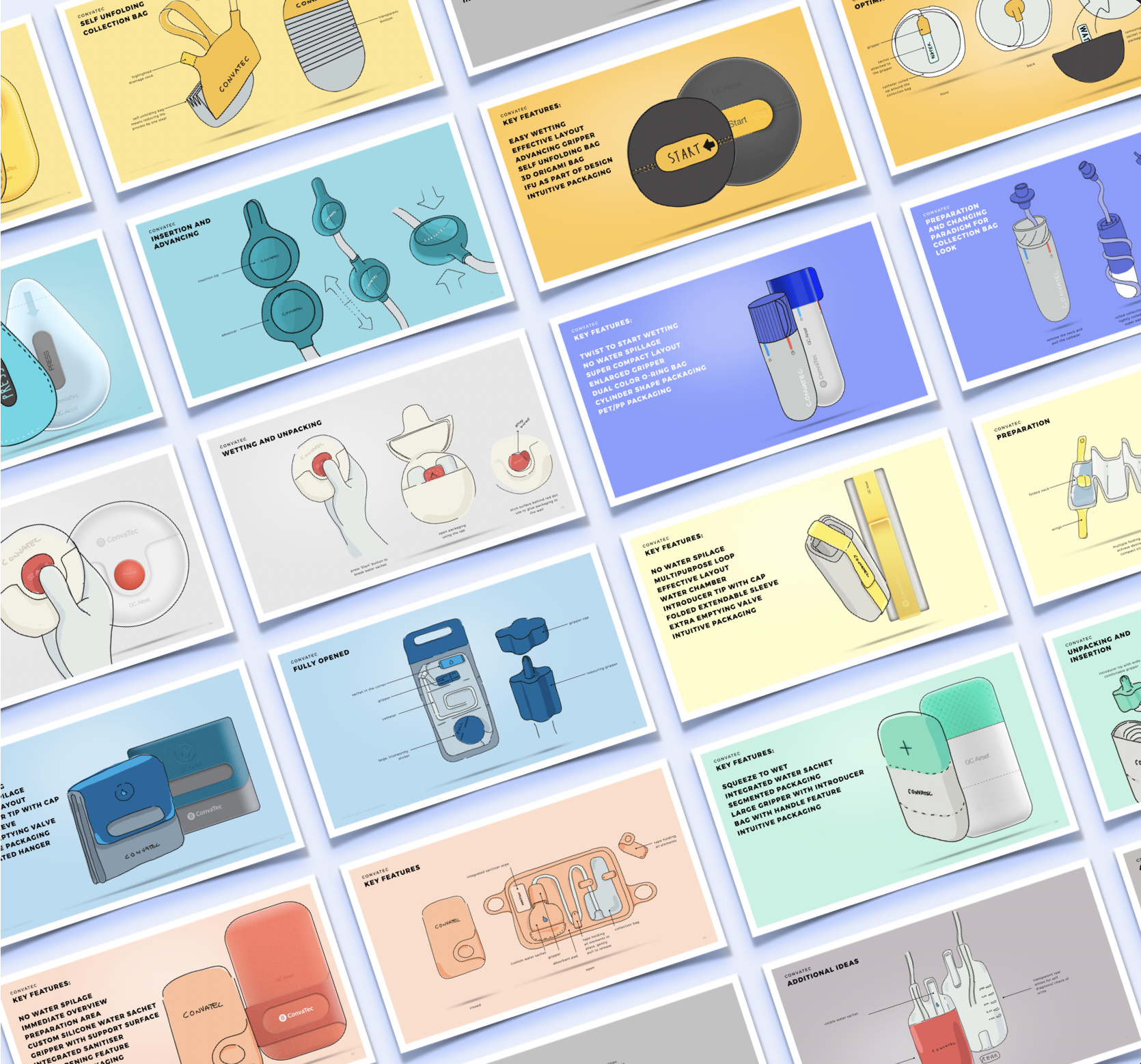
Usability testing for an intermittent urinary catheter
Client: confidential
Role: Lead UX Researcher
Methods: In-person Testing + Remote Moderation, Concept Evaluation, Usability Observation
Scope: Catheter users across the USA and UK
Intermittent catheter users depend on products that must be reliable, discreet, intuitive and safe. Small usability issues can significantly impact daily life, independence and comfort.
To support the development of a new catheter concept, we were asked to evaluate three early designs through hands-on user testing. Because travel was limited during the COVID-19 period, the research had to be conducted through a mixed model: local, in-person product handling supported by remote moderation from me.
The goal was to understand how users interact with physical prototypes, where friction occurs and which design elements meaningfully improve the catheterization experience.
Context
The project needed to build on existing concept development while ensuring that the testing setup provided a realistic, safe and insightful evaluation of three physical prototypes - during a time when travel was highly restricted.
Key challenges included:
testing physical prototypes remotely without losing quality of observation
supporting recruitment across the USA and UK with diverse medical conditions
capturing fine-grained handling details such as grip, lubrication and unfolding
balancing convenience, discretion and usability in a single design
generating insights that guided both design strategy and manufacturability
The success of the evaluation depended on carefully prepared logistics, a smartly defined sample and a reliable setup for observing detailed catheter interactions from afar.
Challenge
Concept Preparation & Prototypes
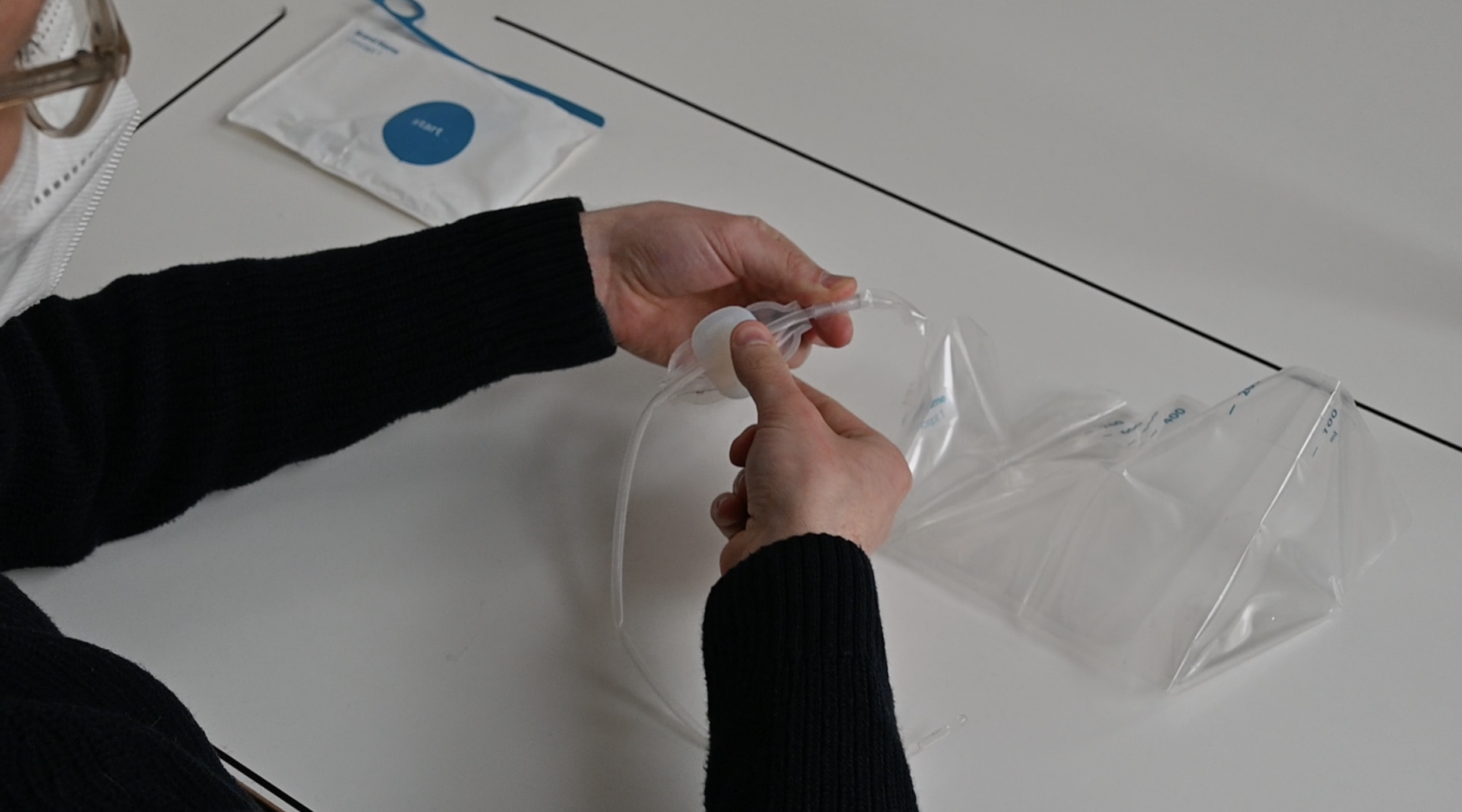
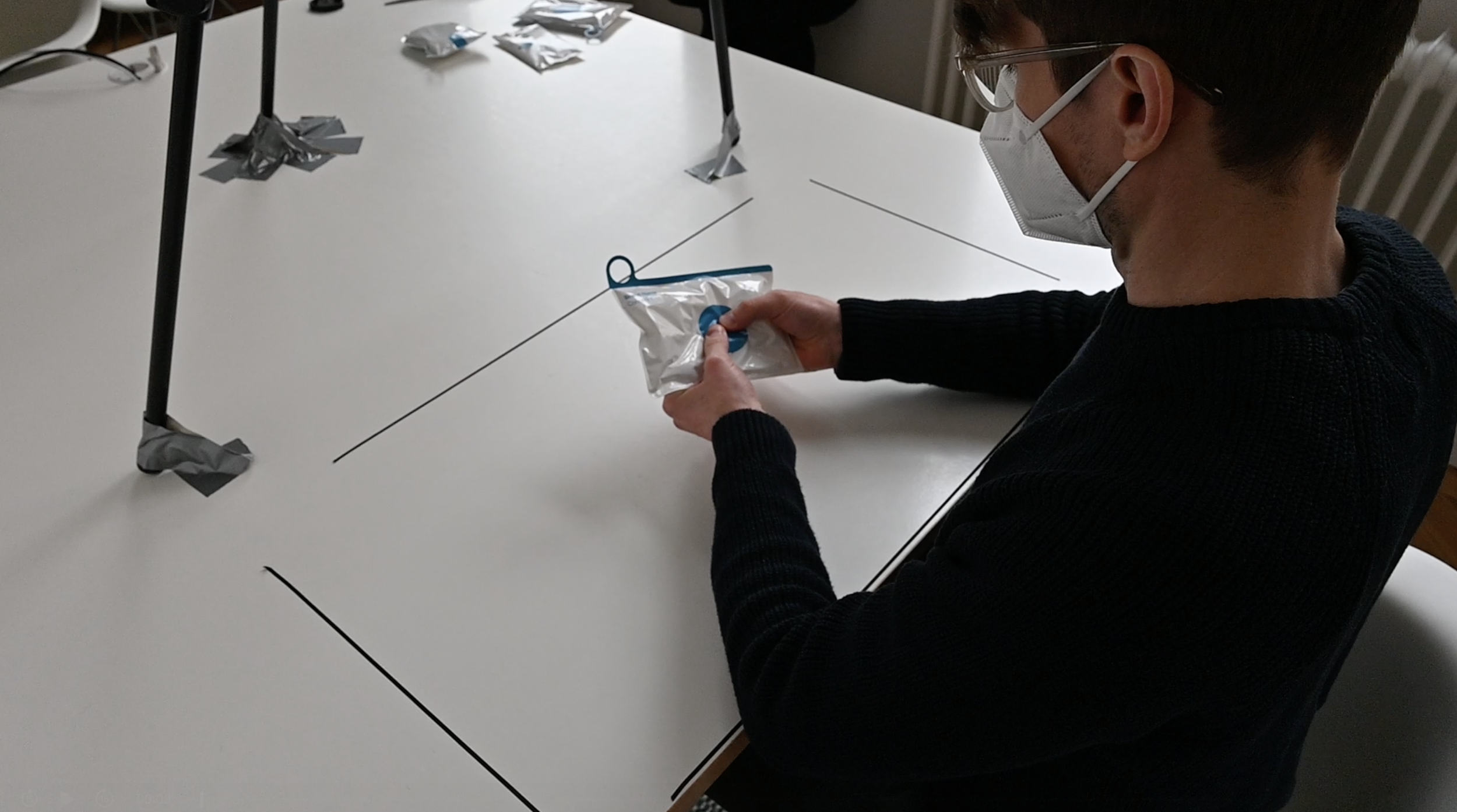
The design team developed three early catheter concepts, which were then turned into functional prototypes by a professional modelmaker. These were shipped to participants in the US and UK. Local support teams handled the prototypes on-site because international travel was restricted during COVID-19.Recruitment & Participant Screening
We recruited users of intermittent urinary catheters with a range of medical conditions, including paraplegia, quadriplegia and other mobility or neurological challenges. This ensured we tested with people whose needs and dexterity levels are directly relevant to catheter use.Interview Setup
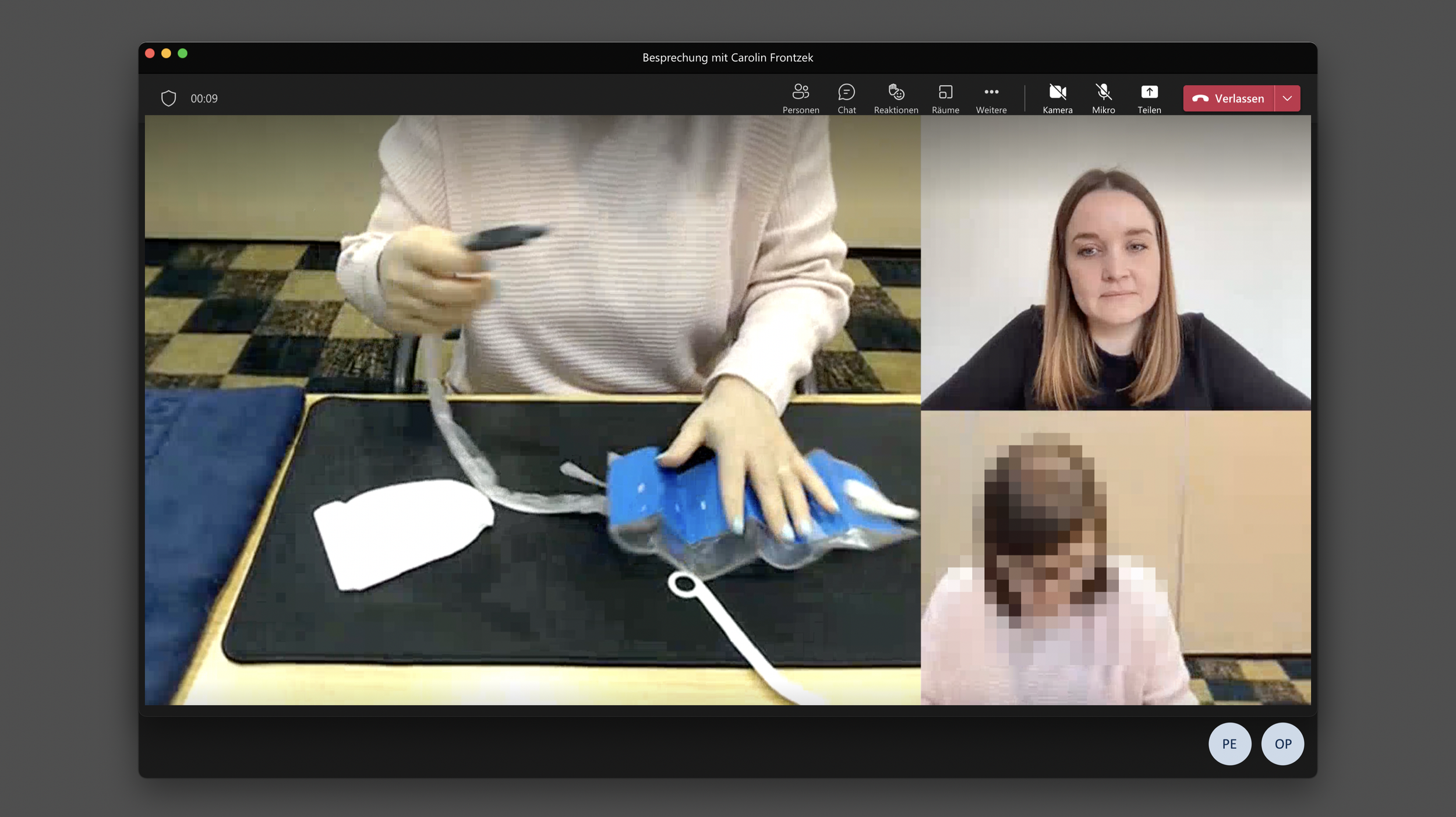
I moderated the interviews remotely, while local facilitators supported the physical handling of prototypes. To capture both conversation and fine-grained interactions, we used a two-camera setup:one camera filming the participant’s face for conversation and reactions
one camera filming only the hands to document how prototypes were handled
This setup allowed us to observe usability safely and effectively from abroad.
Approach
Testing Procedure
Every session followed the same structure to keep the data consistent:Warm-up & background - understanding each participant’s medical context and catheter history.
Current product discussion - what works, what frustrates them, what they wish existed.
First impressions - unboxing and initial reactions to each concept.
Naive-use observation - participants tried the prototypes without instruction, showing how intuitive the designs were.
Comparison & ratings - participants compared the three concepts and rated key steps such as lubrication, unpacking, insertion and disposal.
Wrap-up - final thoughts, recommendations and what they considered the biggest improvement.
Cross-Team Collaboration
Close alignment with the design and engineering teams ensured that insights flowed directly back into concept refinement and strategic product direction.
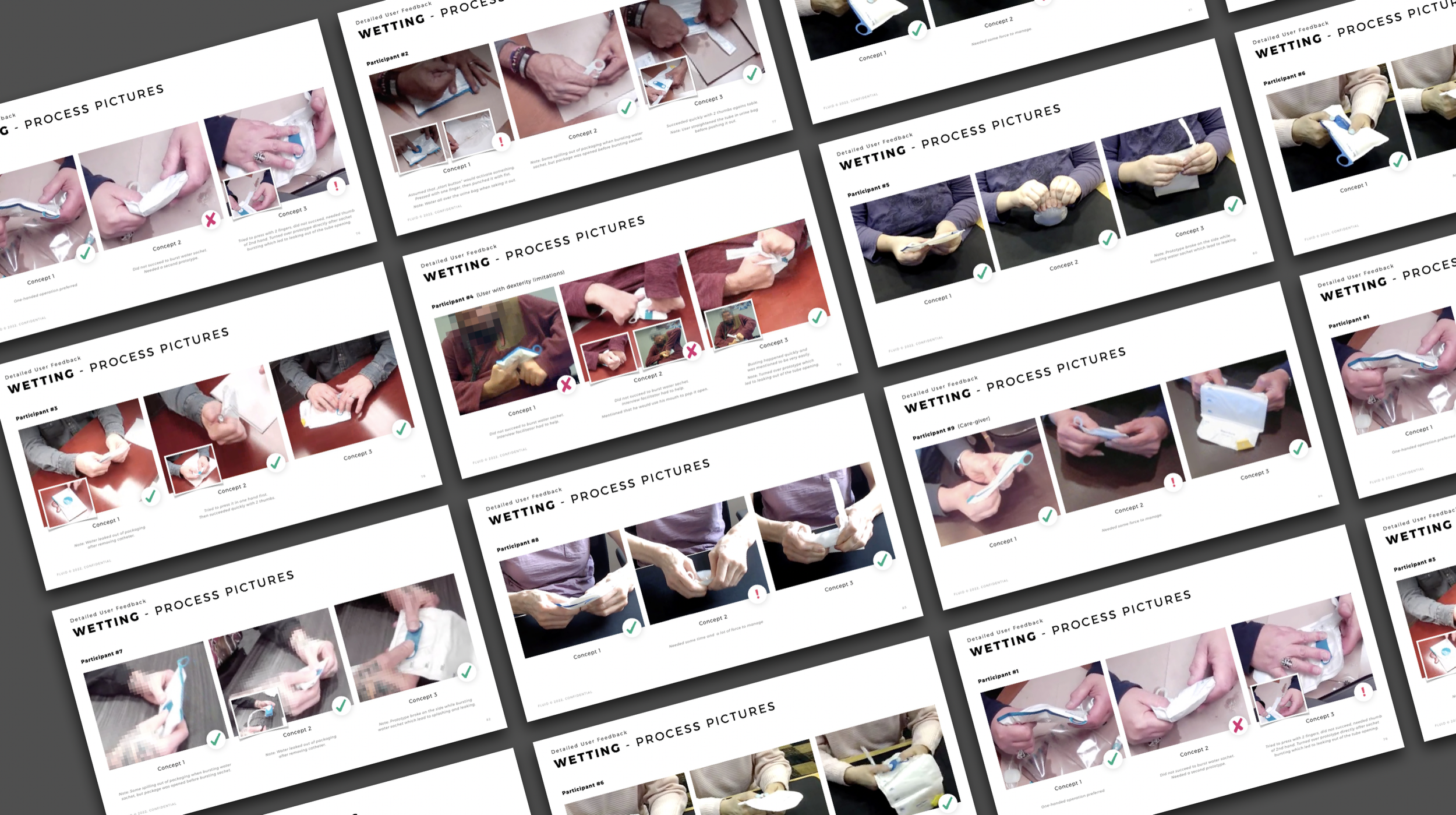
Intuitive handling is inconsistent across users
Users with limited wrist mobility or reduced hand strength struggled with certain packaging and lubrication steps. Small design tweaks had large effects.Wetting and preparation steps strongly influence overall satisfaction
Participants emphasized that predictability, speed and cleanliness of wetting were decisive for comfort and perceived hygiene.“Naive-use” exposure revealed hidden friction points
Even highly experienced catheter users showed hesitation when packaging or unfolding cues were unclear. This highlighted the importance of strong visual and tactile affordances.Disposal matters more than expected
A discreet, manageable disposal experience was consistently mentioned as a high-impact improvement across all three concepts.Clear wins emerged between concepts
Participants were able to articulate which design choices improved their confidence. This helped to define a clear preferred direction for refinement.
Key Insights
The research delivered a detailed understanding of how users handle the three catheter concepts and where refinements can significantly improve comfort, safety and ease of use. Despite remote moderation, the setup enabled high-quality, nuanced observation.
The outcomes included:
a validated direction for the next-generation catheter
actionable refinements for packaging, wetting, insertion and disposal
clear guidance on balancing convenience, discretion and usability
deeper insight into user needs for long-term product and CX strategy
a strong evidence base supporting a manufacturable and desirable product brief
The insights strengthen both immediate concept decisions and long-term product development for this user group.