Innovation toolkit & process coaching for product teams
Client: Eppendorf
Role: Process Coach & Lead UX Researcher
Methods: Stakeholder Interviews, Design Thinking, Workshop Facilitation, User Research Methodology, Agile Coaching
Scope: Cross-functional teams across multiple business units
Eppendorf is a global leader in laboratory equipment, but like many life-science companies, it faces a market that’s rapidly changing.
Digital tools, new workflows and rising user expectations mean product teams can no longer focus on hardware alone. What matters is the experience around it: how tools fit together, how intuitive they feel and how well they support real lab work.
To make this shift, Eppendorf needed a partner who could help teams work more user-centrically, explore new opportunities with confidence and reduce the friction that often slows early-stage innovation. This is where FLUID stepped in as a long-term coaching partner.
Context
Early-stage innovation looked different across teams. Some relied on too many frameworks, others had none. User research experience varied widely, and projects often began without a clear understanding of customer needs.
Teams were looking for a way to:
understand users early and meaningfully
cut down on assumption-driven debates
work more confidently despite uncertainty
stay aligned across disciplines and business units
make faster, better decisions
In short: teams needed one practical, flexible, user-centered way of working that everyone could rely on.
Challenge
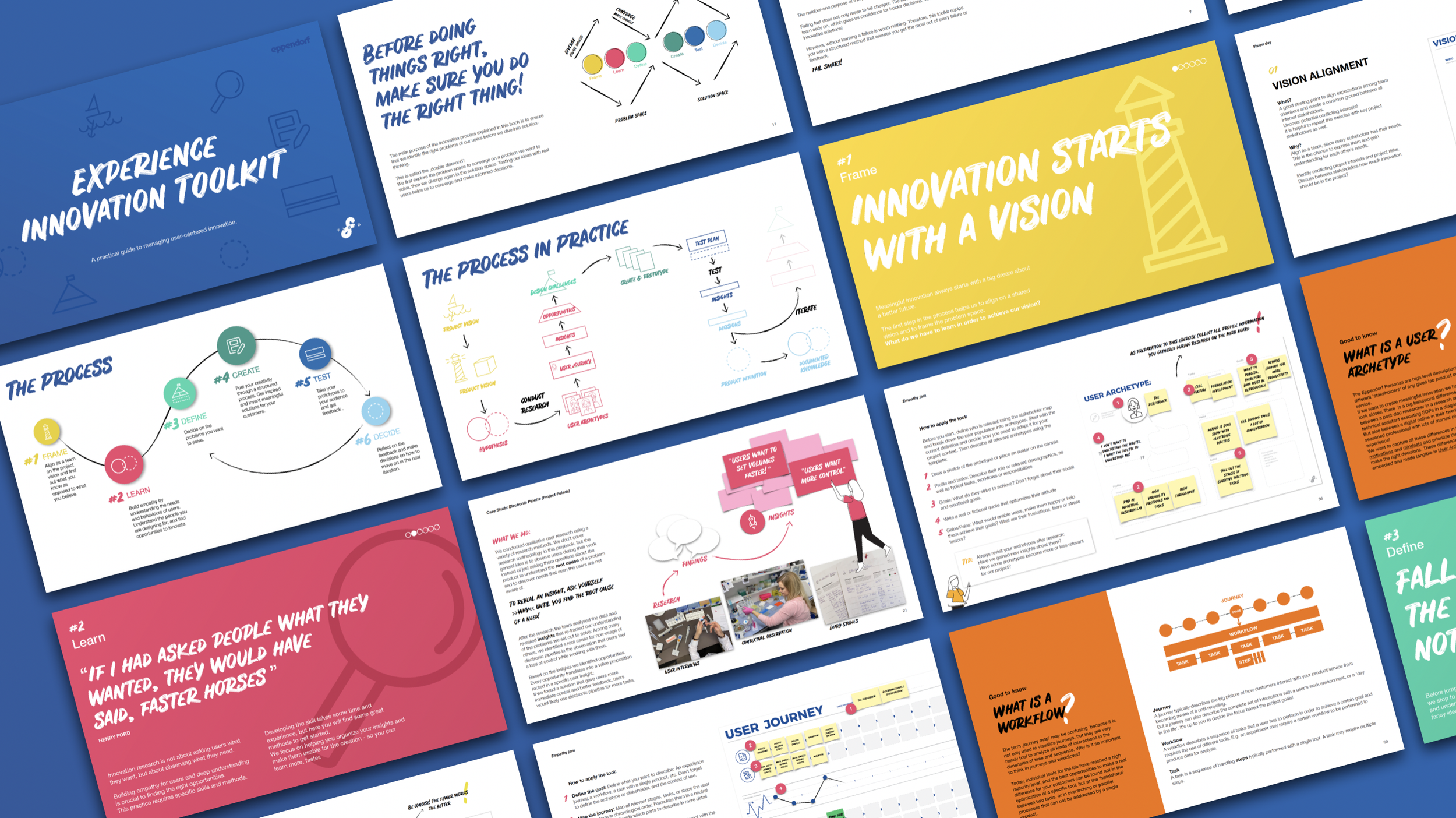
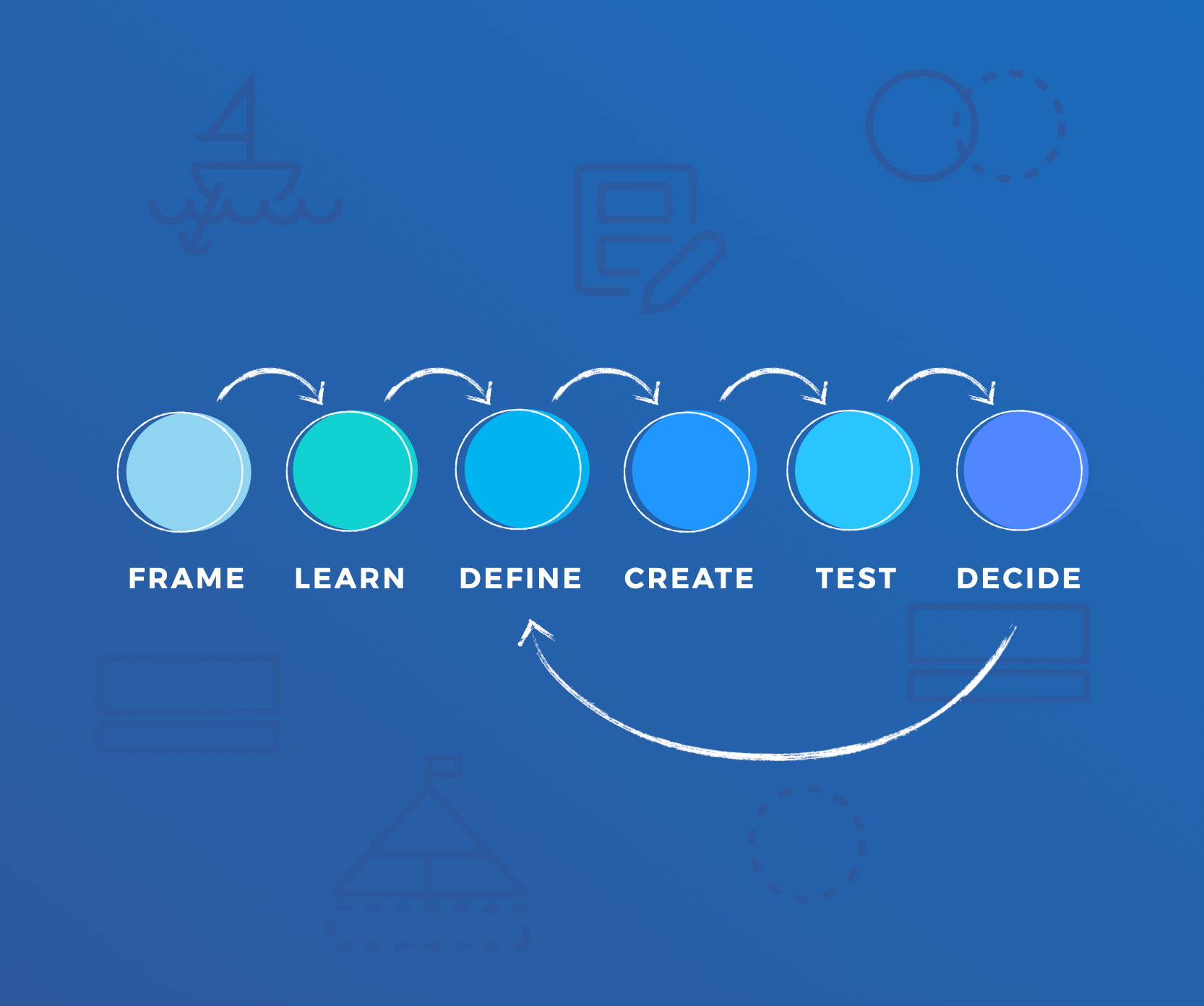
Experience Innovation Toolkit
We developed a practical playbook that guides teams through the first steps of innovation. From framing an opportunity to validating early ideas. It’s built around a series of simple, structured workshops that help teams learn quickly and make decisions with confidence.User Research Methodology Toolkit
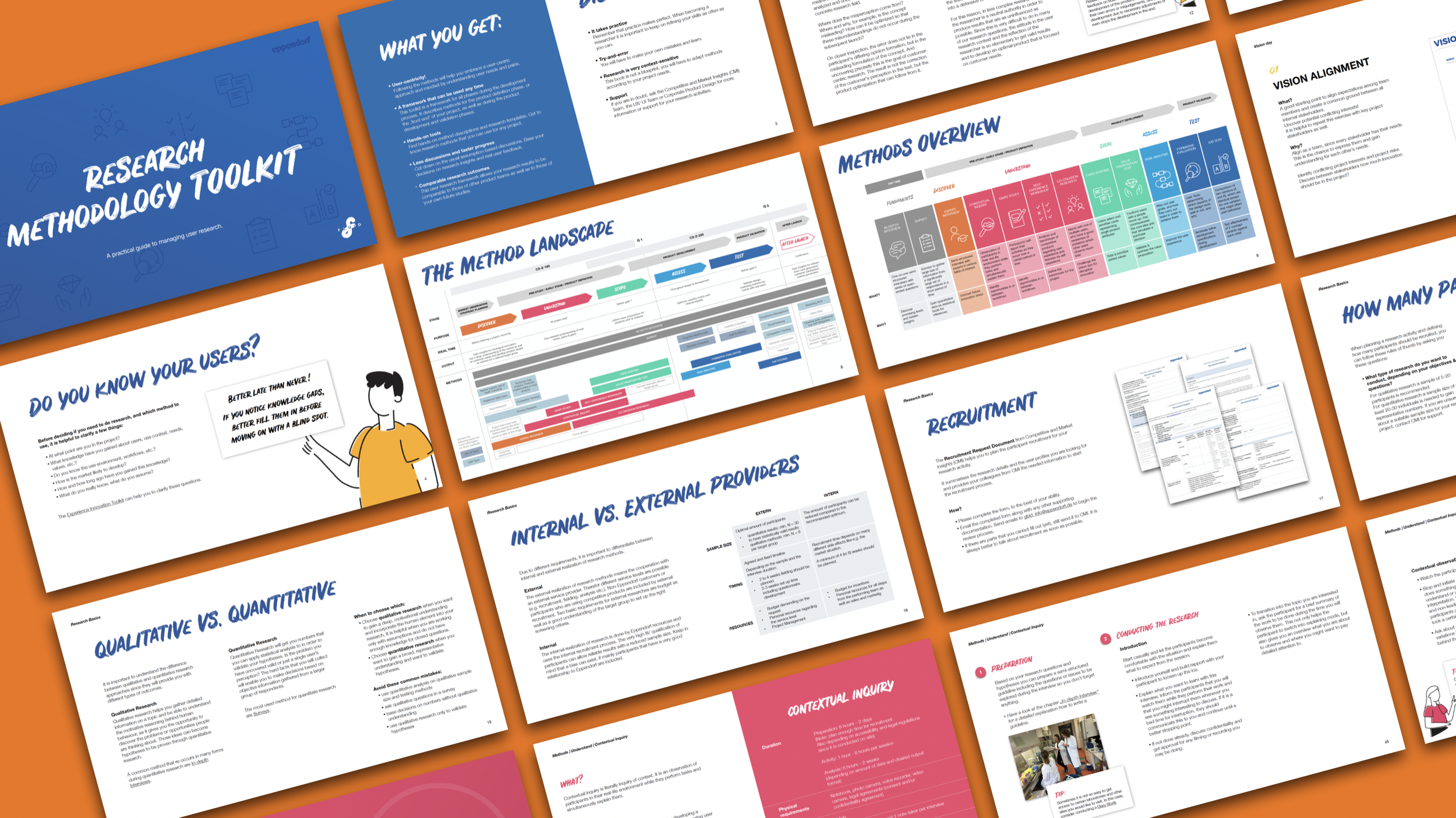
To support this, I created a companion guide that explains the most useful research methods, when to use them and how to plan user tests. It gives teams a realistic sense of time, effort and expected outcomes.Workshop Templates & Canvases
Ready-to-use templates, Miro boards and clear instructions make the tools easy to apply in any project. They help teams stay focused and move forward without getting stuck in theory.
Approach
Facilitation & Coaching
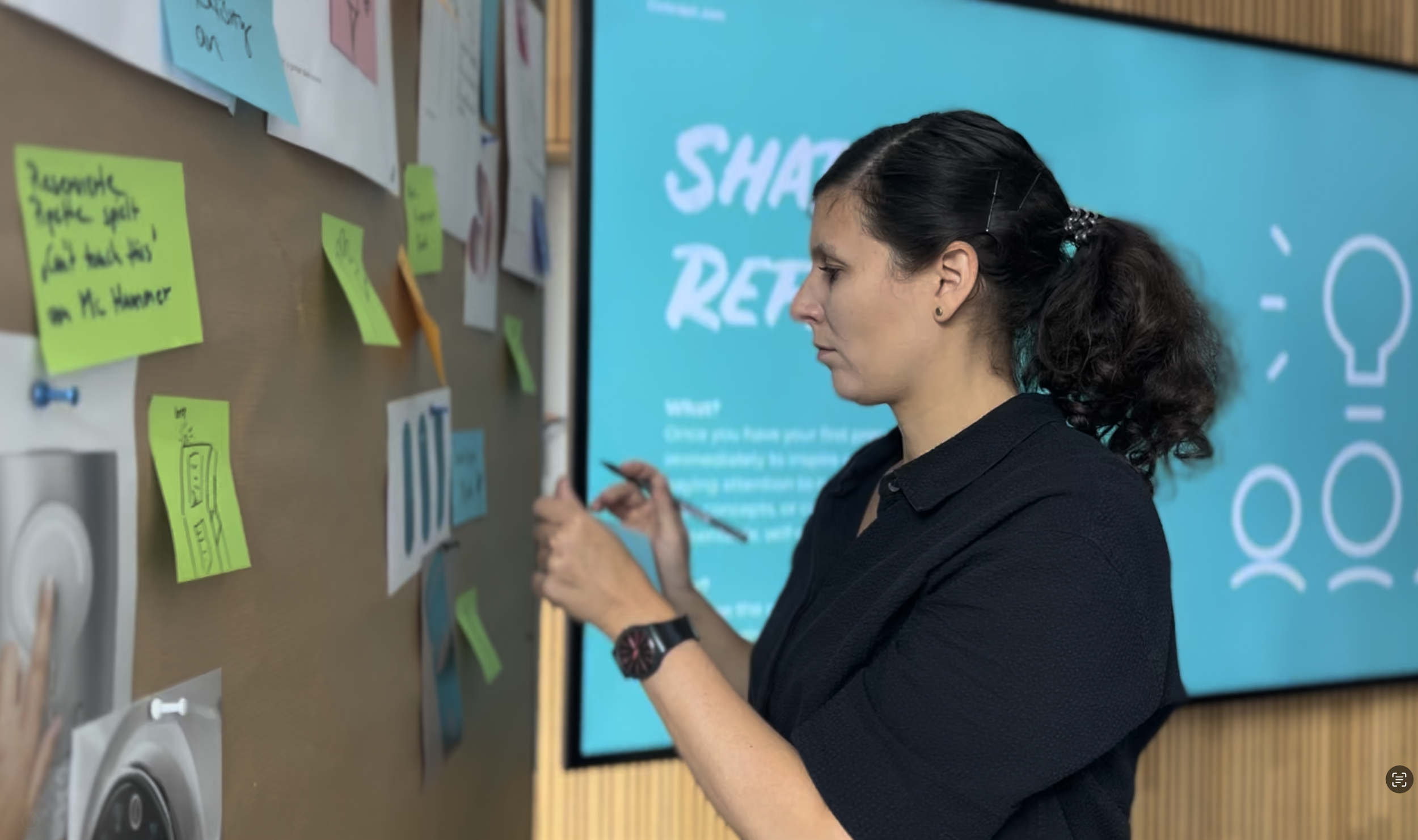
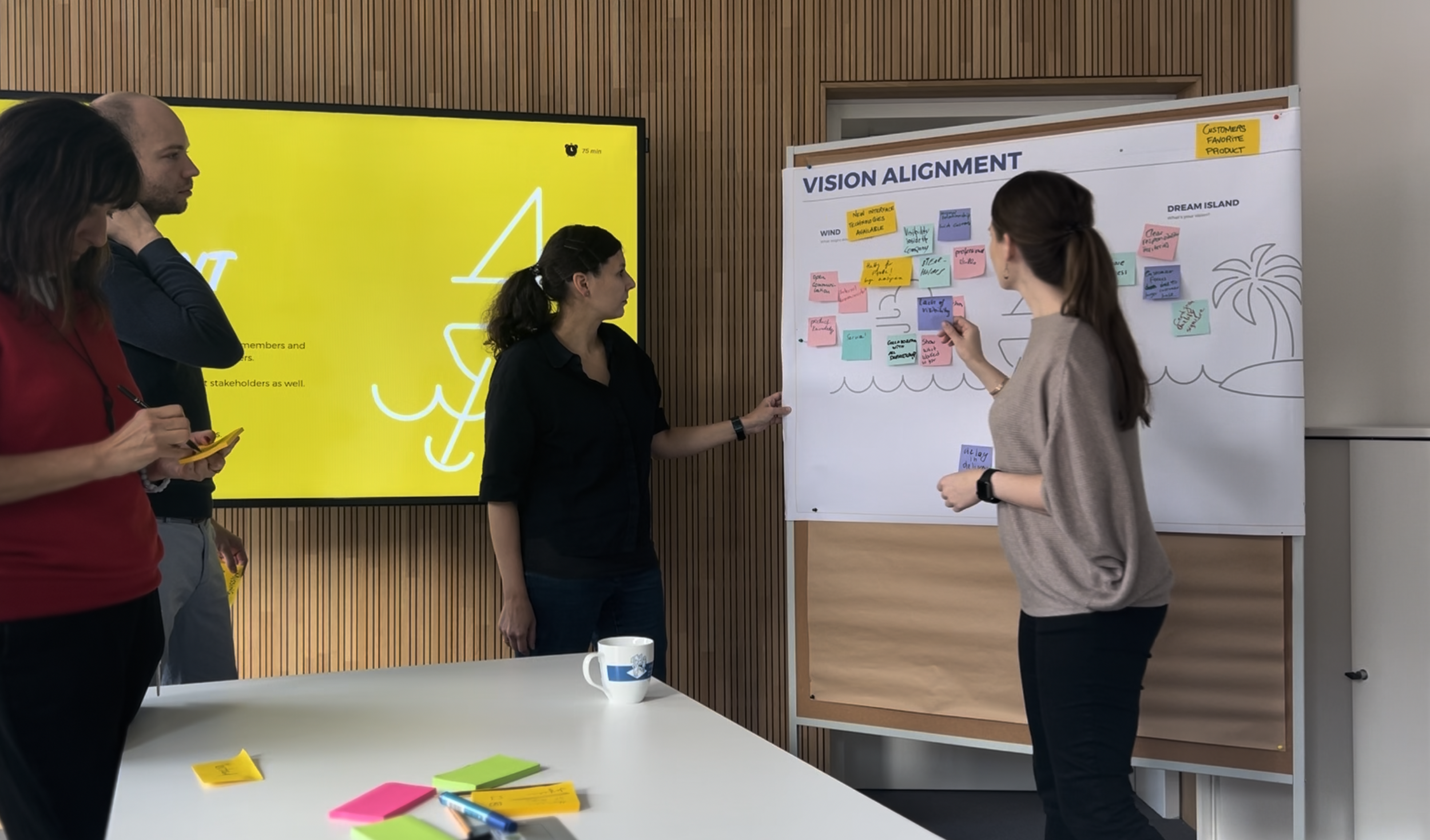
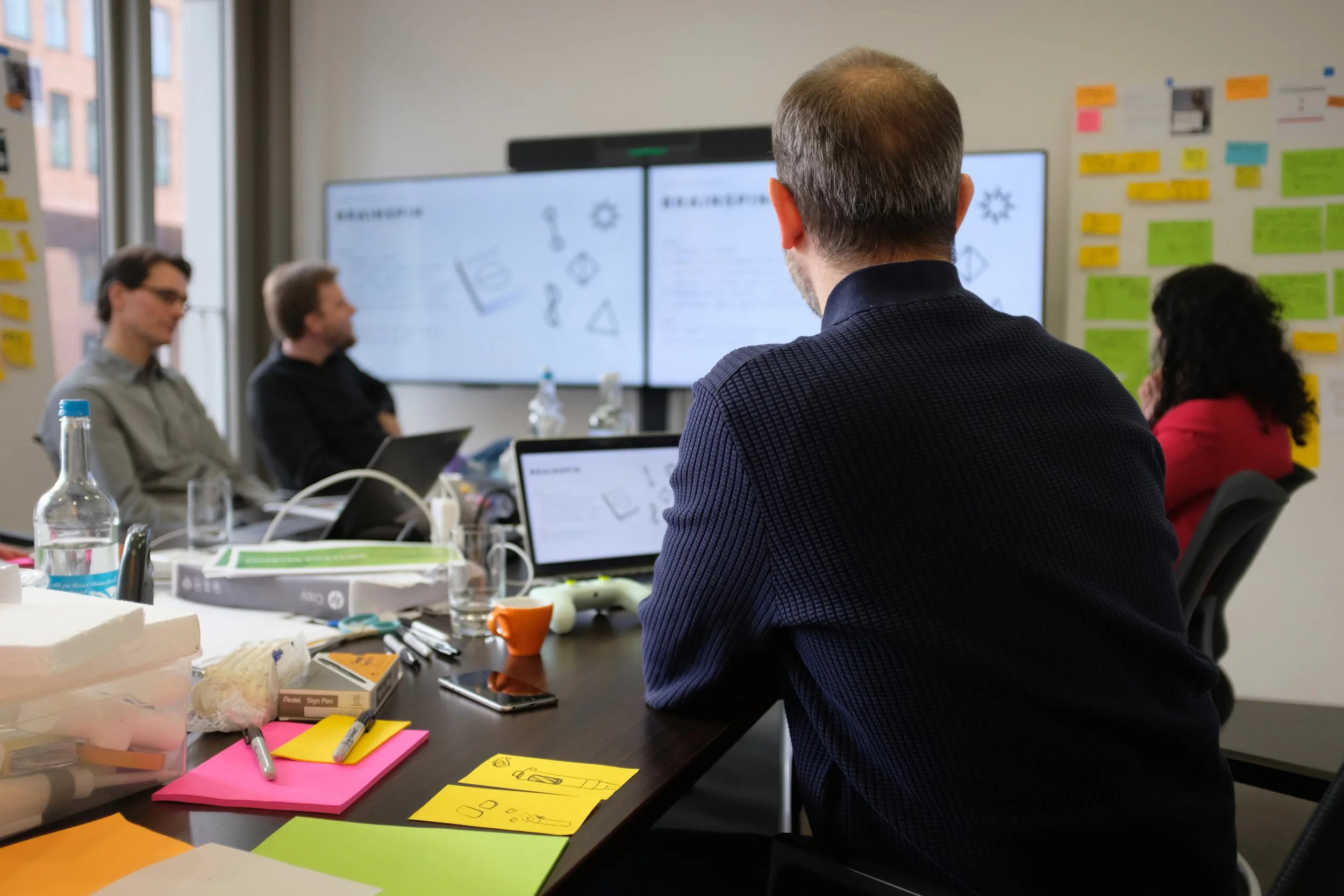
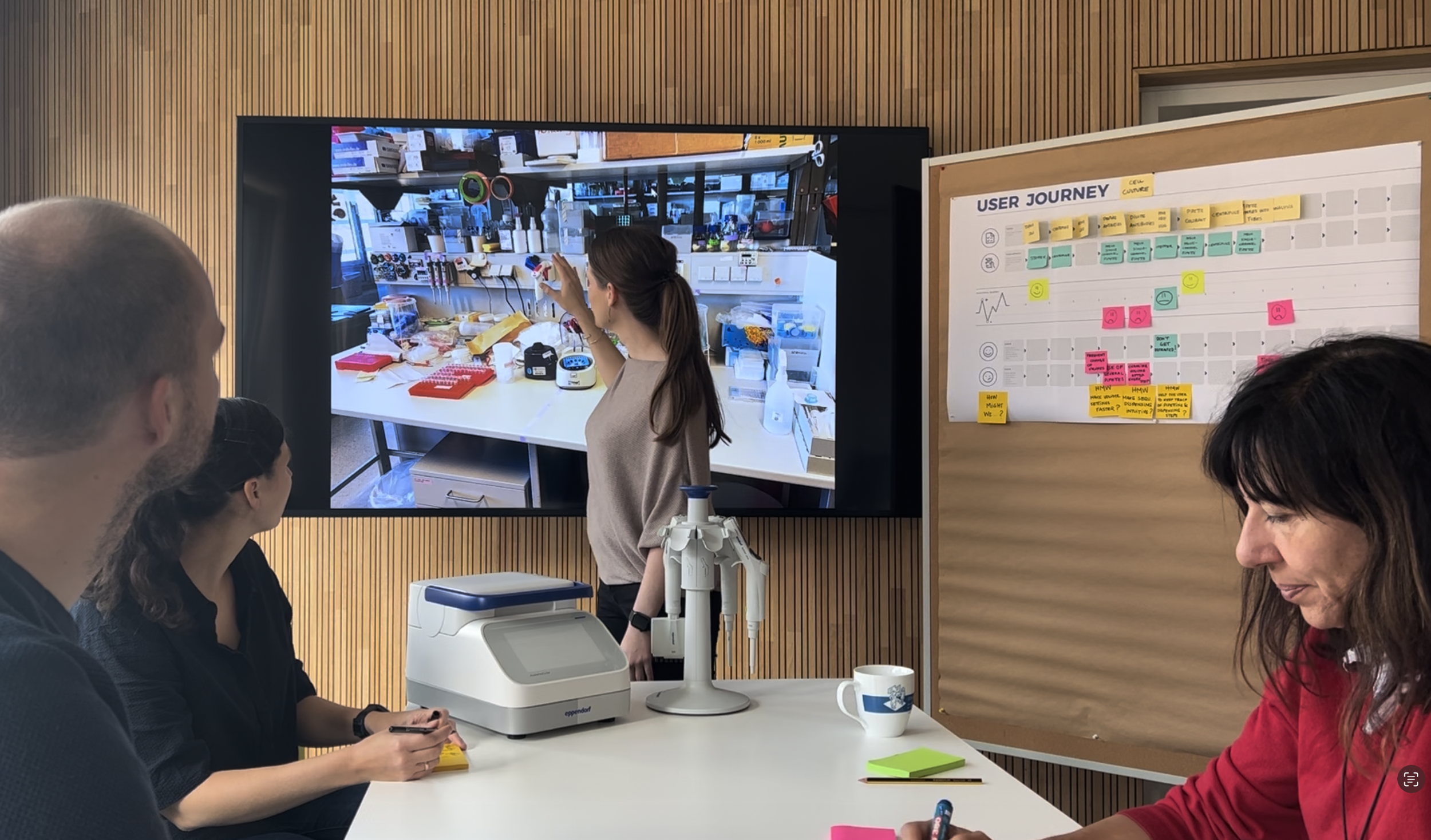
I coached and supported teams in countless workshops, guiding them through opportunity mapping, problem definition, ideation, prototyping and user testing. The goal was to help each team work more openly, more collaboratively and more creatively.Co-Creation of the Process
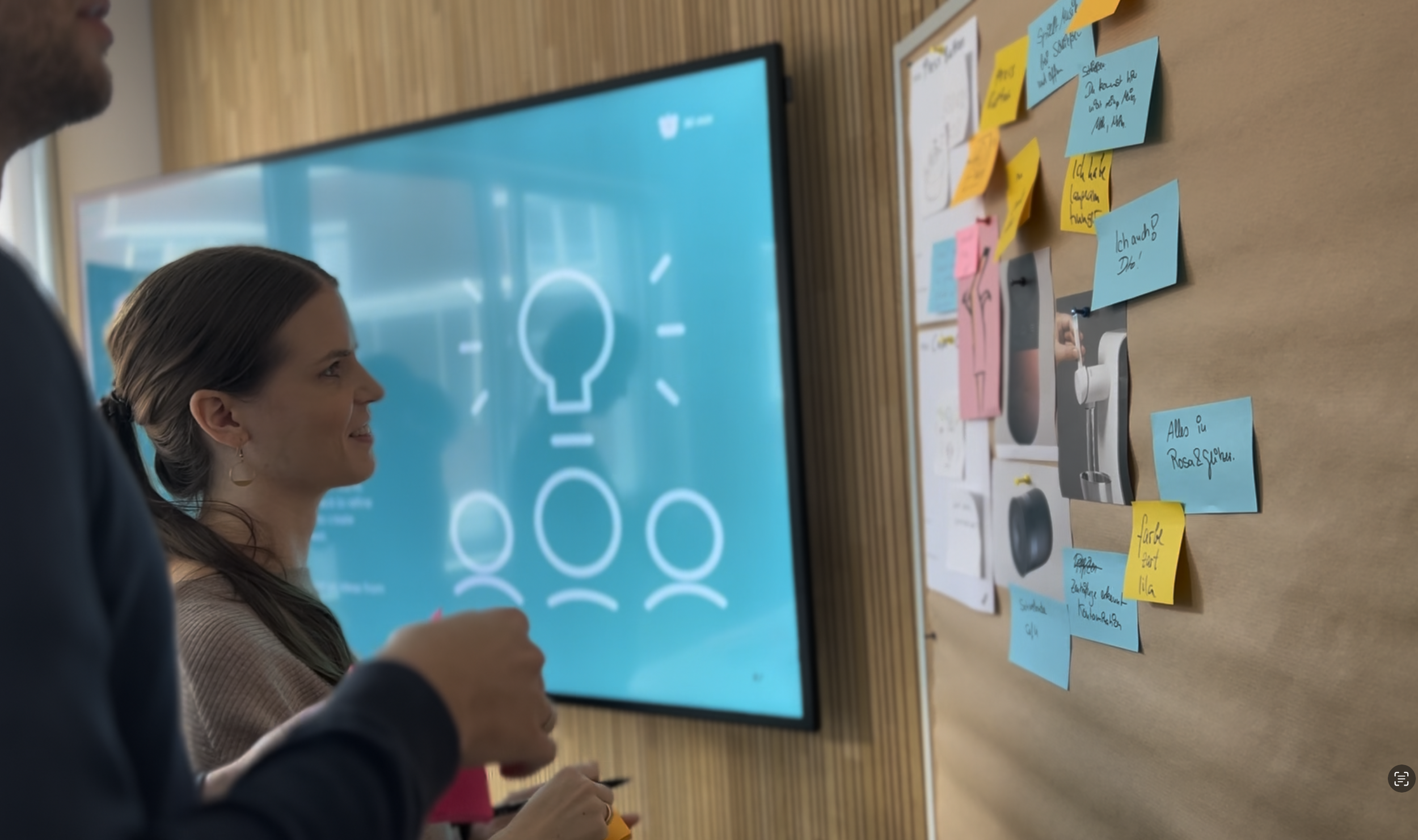
All tools were shaped together with Eppendorf’s project teams and product experts. This ensured the approach fits real organisational needs and isn’t a generic textbook model.Two Ways to Start
The toolkit supports both new, exploratory “Invent” projects and ongoing “Improve” projects where a value proposition already exists.
People needed fewer frameworks, not more
Teams were overwhelmed by choice. A simple, shared process worked better than a perfect one.Real user understanding was missing early on
Teams jumped into solutions too quickly; slowing down to learn made later work much easier.Collaboration improves everything
Mixed teams generate stronger ideas, spot issues earlier and build shared ownership from the start.Iteration builds confidence
Treating ideas as hypotheses and testing them early helped teams make bolder, better decisions.A human-centered mindset takes practice
With the right tools and guidance, teams became more comfortable asking questions, experimenting and learning from feedback.
Key Insights
The new toolkits and coaching approach have become a standard way of working across multiple teams. They give structure to early-stage innovation and help teams collaborate with more clarity, confidence and shared purpose.
The result is:
faster progress and fewer circular discussions
a unified and user-focused innovation process
stronger collaboration across roles, business units and locations
more confident, evidence-based decision-making
solutions that reflect real user needs rather than assumptions
Most importantly, teams feel empowered to explore, test and refine ideas and to treat early learning as a core ingredient of meaningful innovation.
Impact