User-centered pipette redesign for laboratory workflows
Client: Eppendorf
Role: Lead UX Researcher
Methods: Diary Studies, Contextual Inquiry, Ergonomic Testing, Participatory Workshops, Iterative Prototyping
Scope: Manual & electronic pipettes; users across multiple laboratory roles
Eppendorf, a global leader in laboratory technology and liquid handling solutions, set out to reimagine one of the most essential tool families in the modern lab: its manual and electronic pipettes.
While existing products performed reliably, many users struggled with discomfort, small-screen visibility, workflow friction and repetitive strain, especially during long, high-volume pipetting sessions. At the same time, increasing digitalization in laboratories created new expectations for intuitive interfaces, guided workflows and supportive digital tools.
The ambition was to develop a new generation of pipettes that not only meet strict scientific requirements but also provide a measurable step forward in ergonomics, usability and long-term user comfort.
Context
Laboratory professionals vary widely in hand size, expertise, environment and workflow rhythm. Existing pipette designs did not fully support this diversity, leading to usability issues and ergonomic strain during repetitive tasks.
The challenge was to:
understand how different users handle current pipettes
identify ergonomic pain points across long work sessions
improve visibility and reachability of key controls
design for both manual and electronic workflows
ensure comfort and precision for a wide performance range
The redesign needed to feel intuitive and effortless for every laboratory role, not just the average user.
Challenge
User Research & Diary Studies
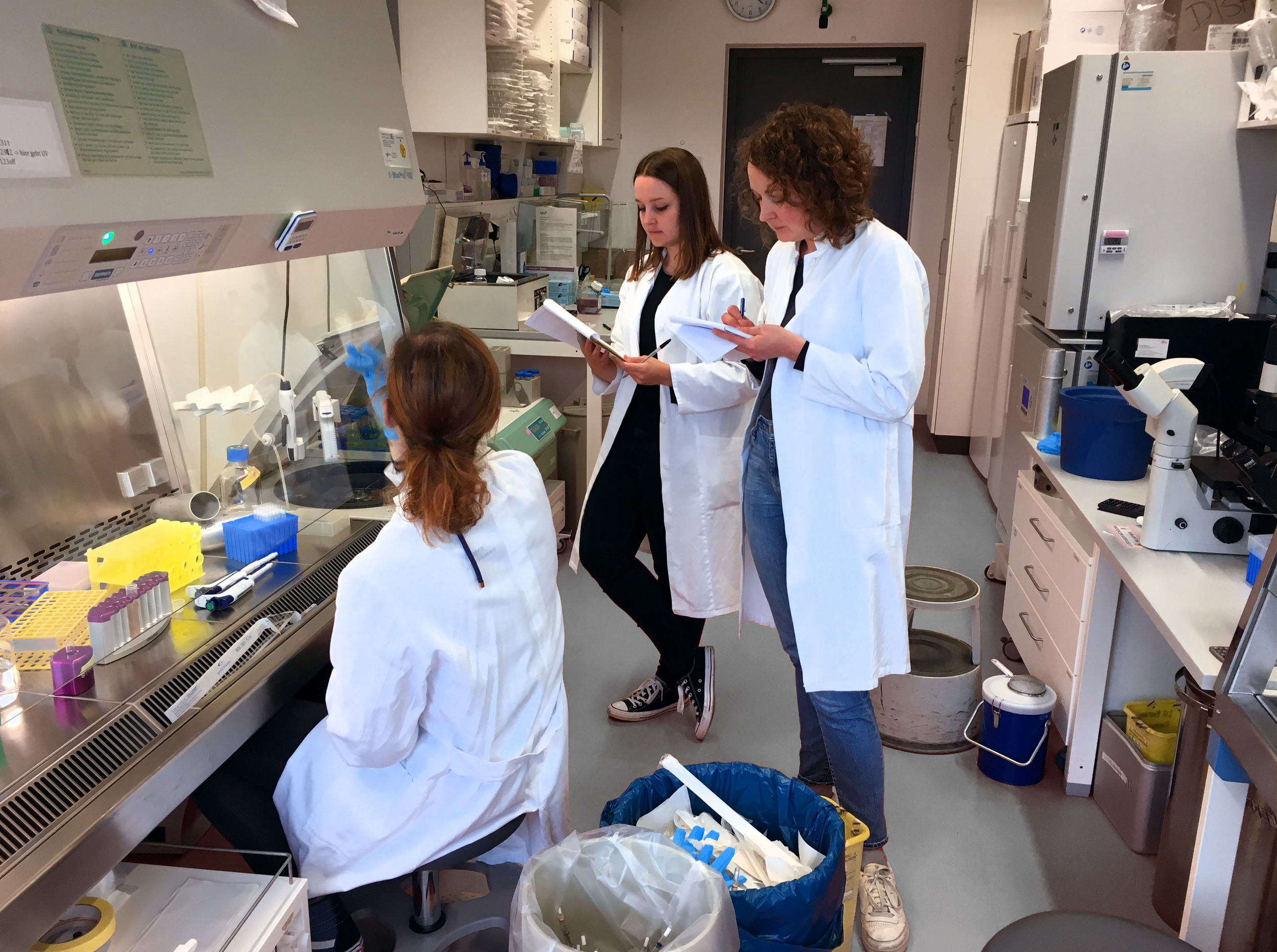
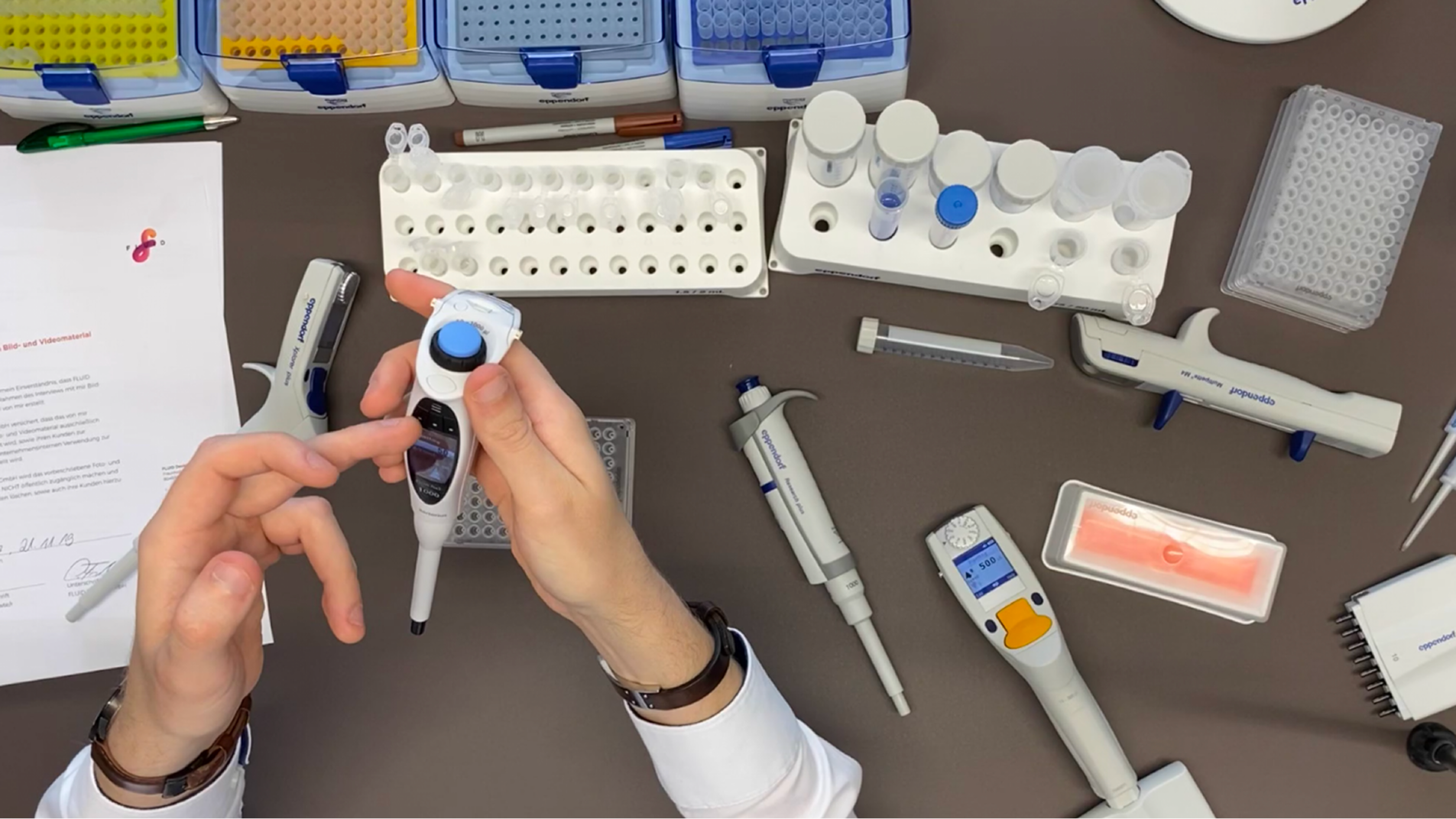
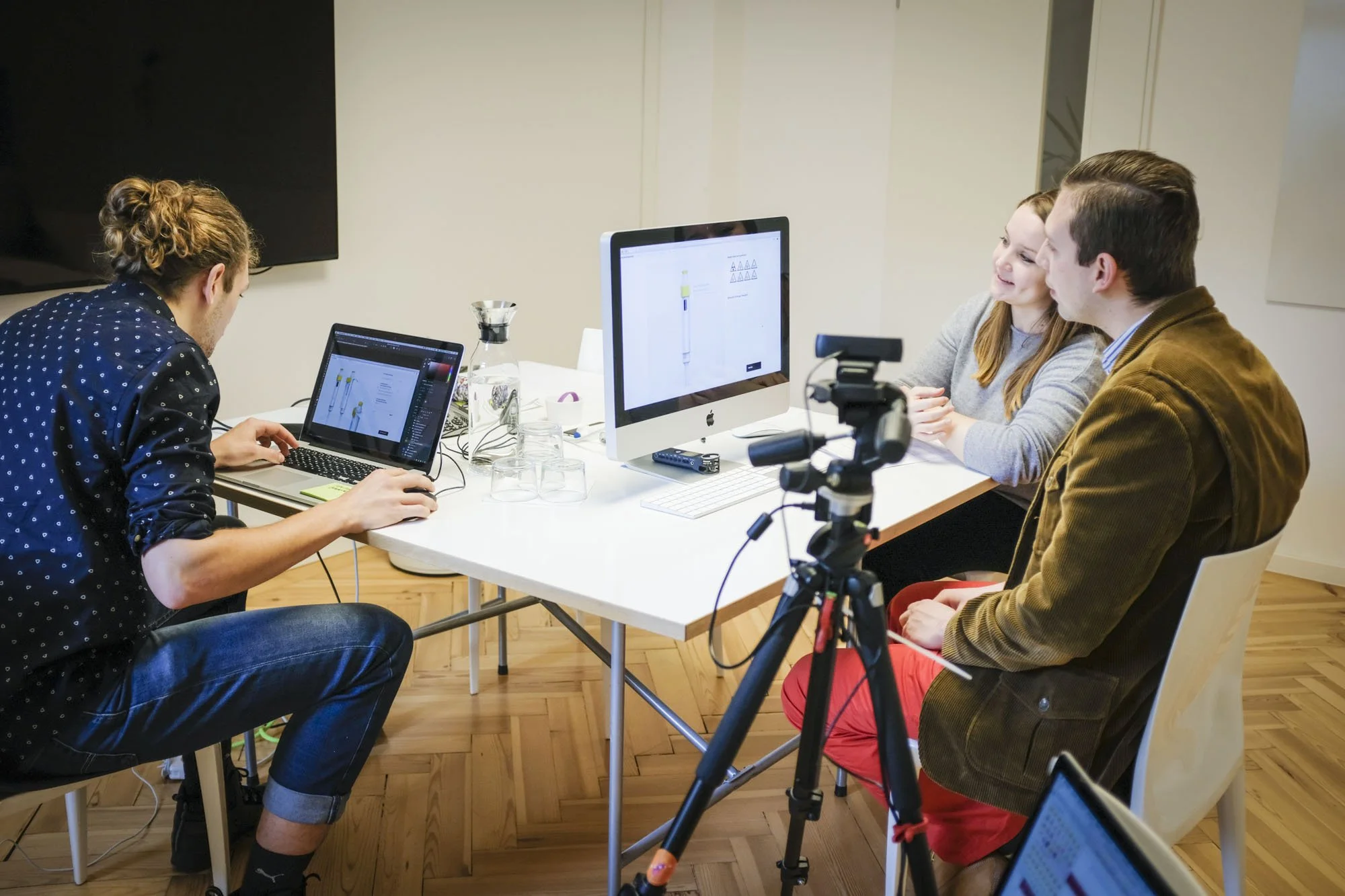
Daily logging exercises, interviews and contextual observations revealed how pipettes are used across different workflows and what challenges arise during prolonged use.Ergonomic & Usability Testing
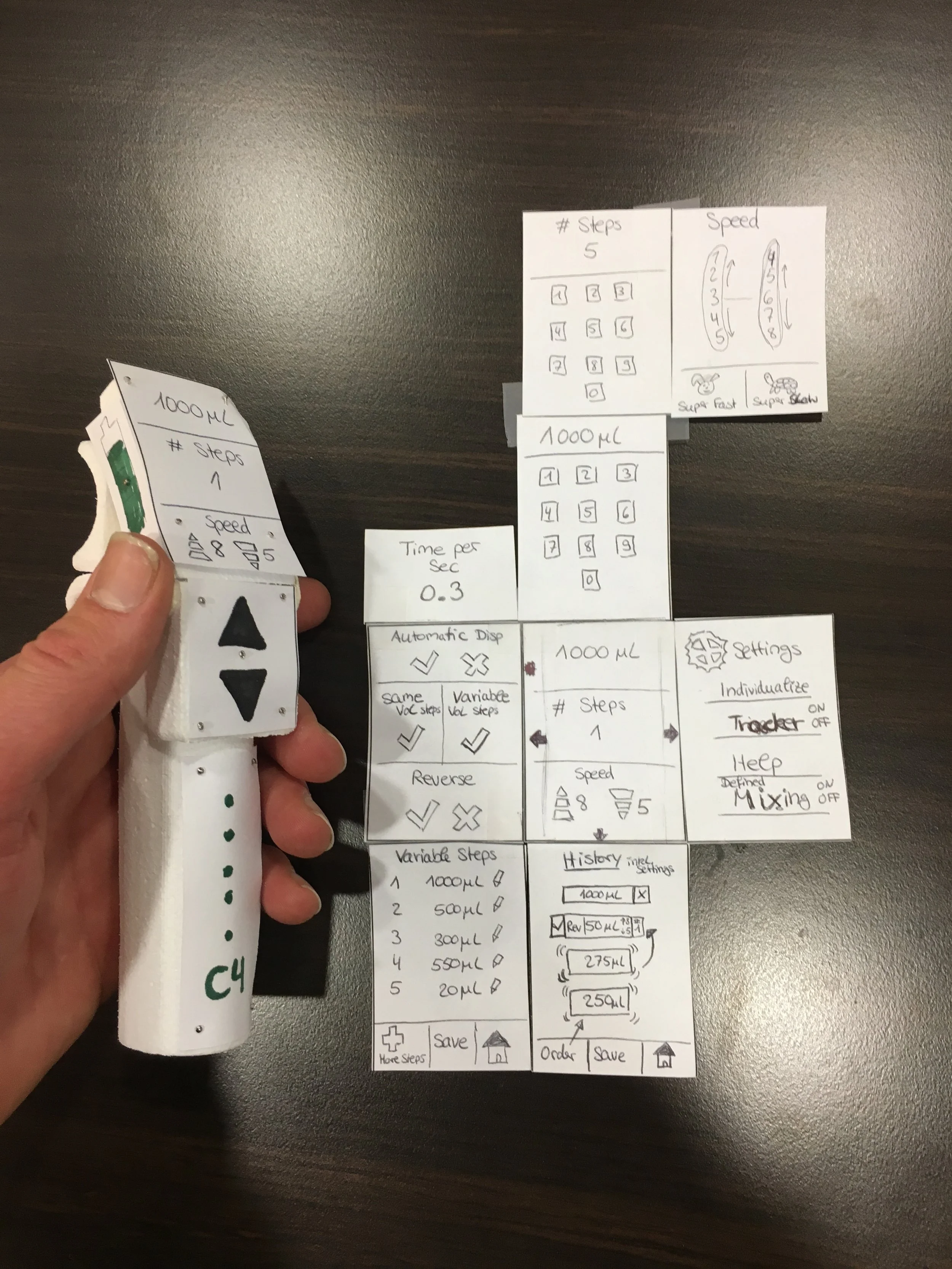
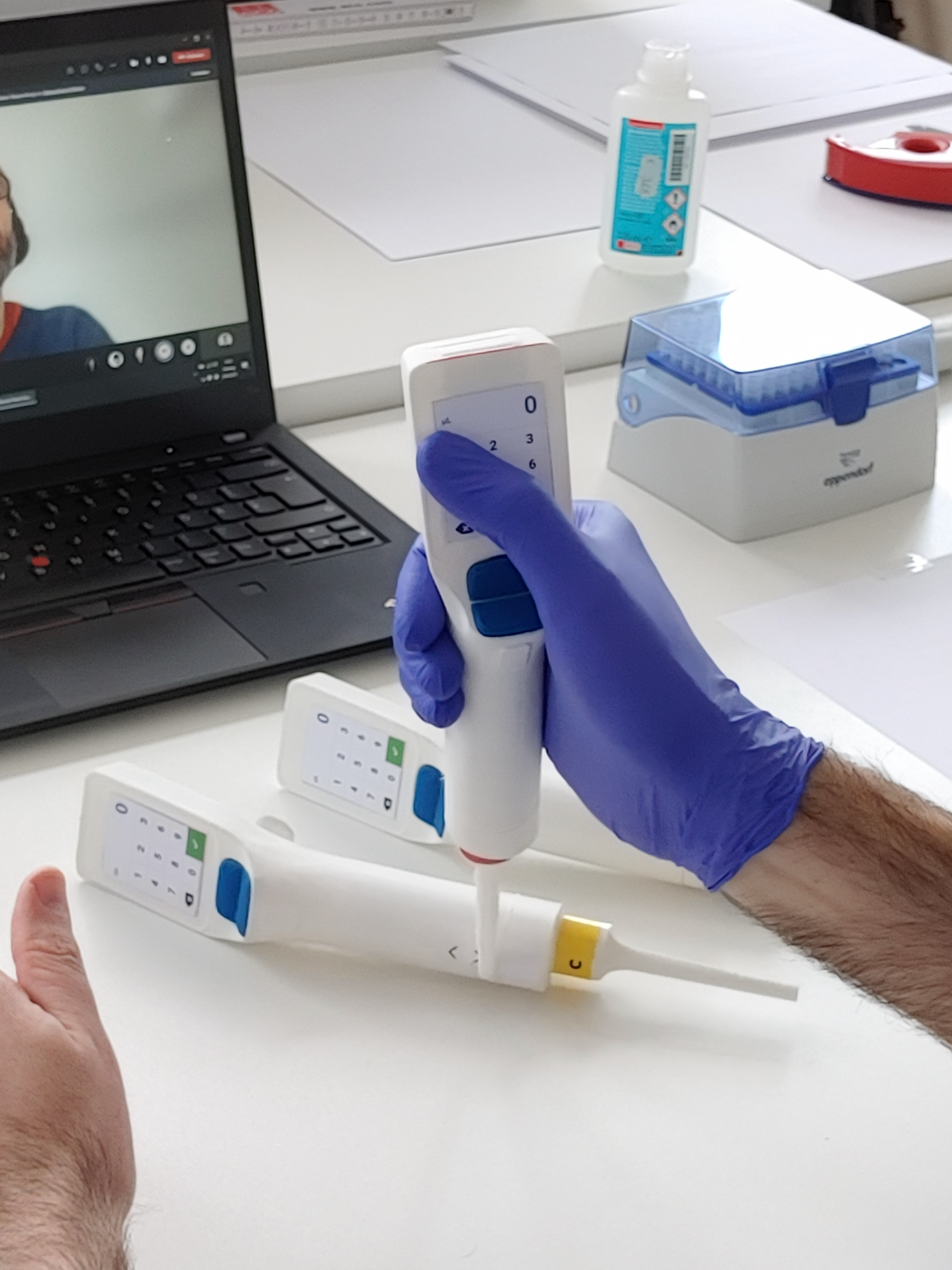
Over several months, we conducted more than 12 rounds of prototype evaluations, from early foam models to late-stage functional samples. This provided evidence on handle geometry, button placement, weight distribution and display readability.Participatory Workshops
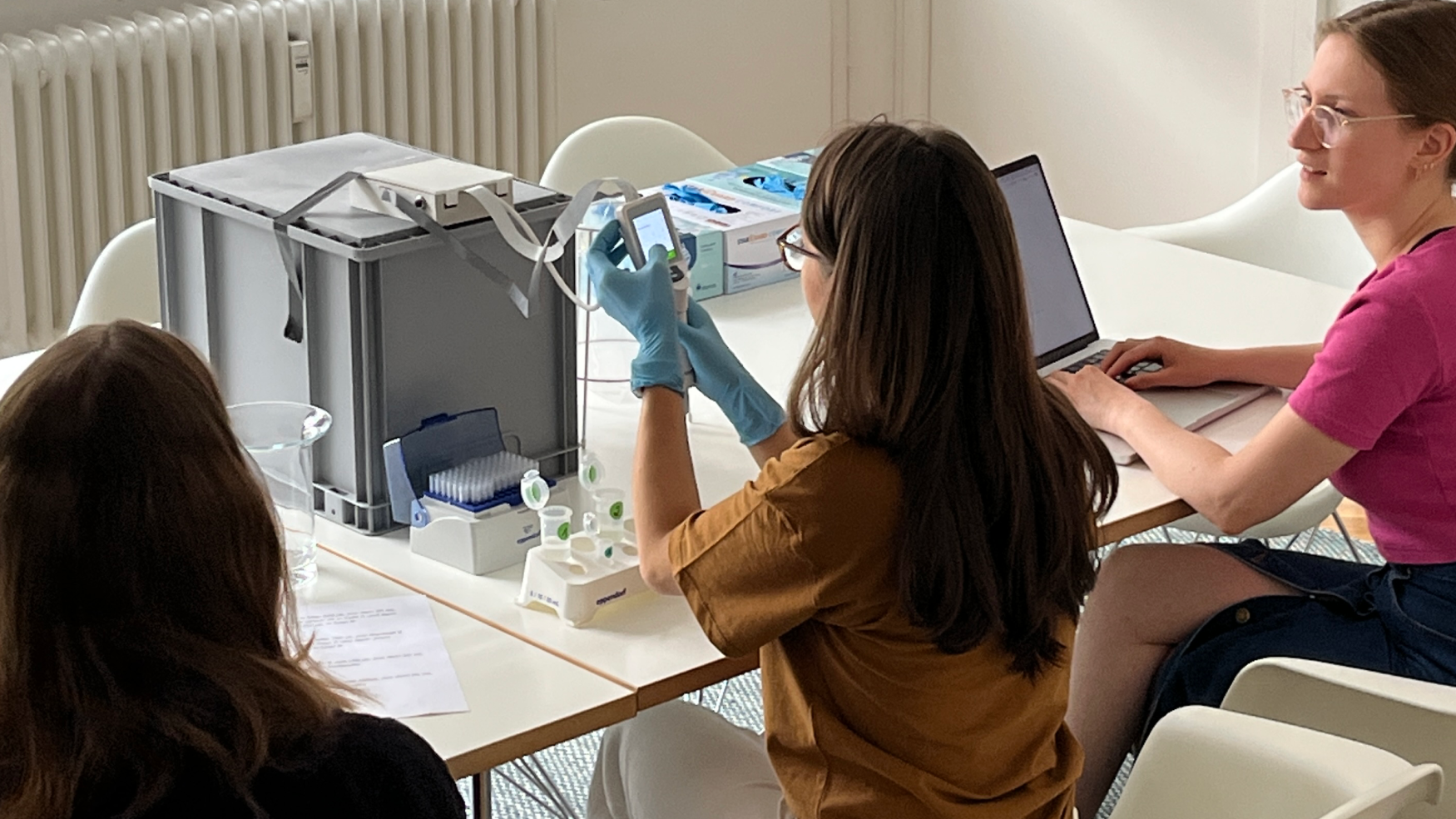
Hands-on co-creation sessions with laboratory specialists allowed users to compare concepts, express preferences and identify friction points in both product and interface interactions.
Approach
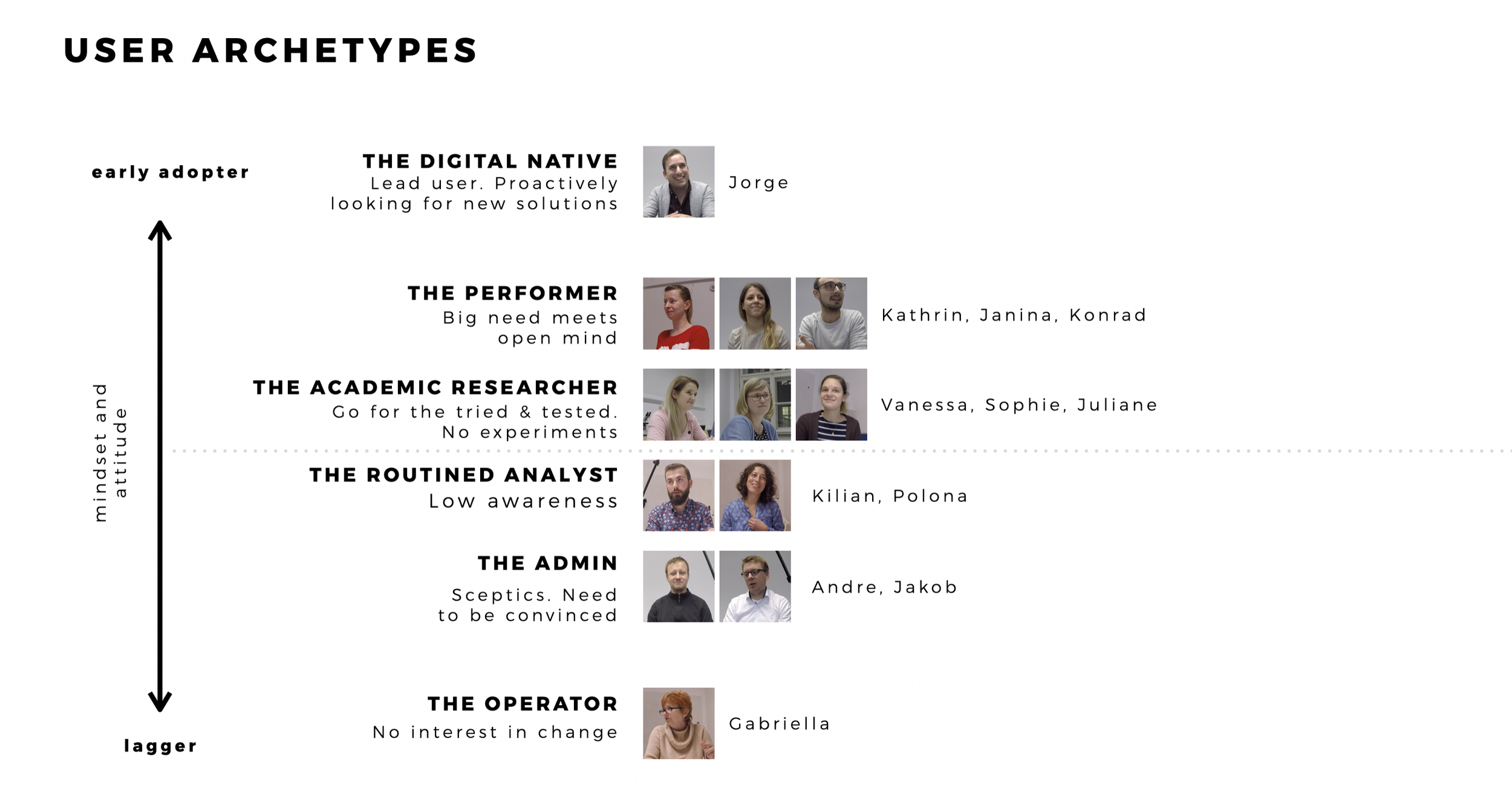
User Archetype Development
Evidence-based user archetypes were created to represent key laboratory roles, ensuring the designs met the needs of novices, experts, technicians and researchers equally well.Sacrificial Concepts & Workflow Probing
Early interface and feature concepts were used to provoke discussion around guided workflows, LED feedback, and step-by-step task visibility.Cross-Functional Collaboration
Throughout all development phases, the research and design teams worked closely with Eppendorf’s product specialists to ensure that testing reflected real laboratory conditions and regulatory performance standards.
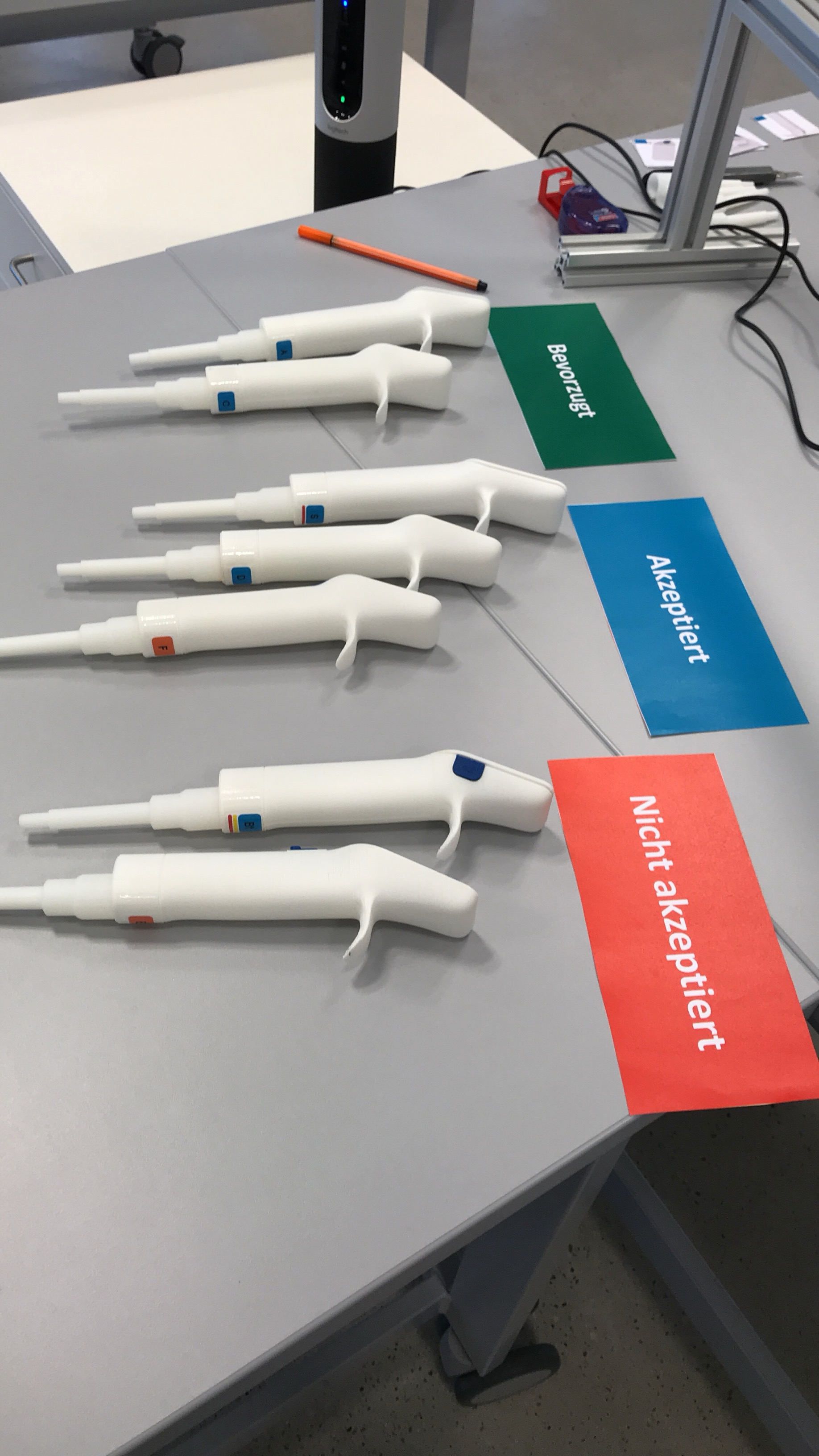
Shaped for every hand
Users vary widely in hand size and grip style; pipettes must feel balanced, comfortable and predictable in every scenario.Guidance improves accuracy
Clear visual cues, including LED indicators and color-coded steps, support confidence and reduce errors during complex or multi-step pipetting.Interface clarity matters
Quick access to frequently used parameters and simplified navigation dramatically improves workflow efficiency.Repetitive tasks drive strain
Long sessions highlight the need for optimized weight distribution, tactile feedback and reduced thumb force.One portfolio, many users
Archetypes revealed that no single “typical user” exists; designs must flexibly support varying levels of expertise, strength and precision.
Key Insights
The research provided decisive clarity on how different users interact with manual and electronic pipettes, helping the team focus on ergonomic and usability improvements that truly matter in everyday lab work.
The project delivered:
validated ergonomic directions for handle geometry and grip
usability improvements for control placement and screen visibility
refined digital interaction patterns for guided workflows
deep insight into the needs of users with different hand sizes and expertise
design principles that informed both current and future pipette generations
The result is a strong foundation for lab tools that are more comfortable, more intuitive and better suited to the diverse realities of scientific work.
Impact